Carndonagh CS


En lisant un bon livre
on se sent libre.
Plonge dans l’histoire
commence à croire,
que tu fais partie -
les pages; ta patrie!
Les petites lettres noires
dessinent ton soir
et tu oublies ta pendule.
Dormir semble ridicule.
Enfin elles échappent à toi
tel que chaque fois
quand tu as lu beaucoup;
Ta tête tombe sur ton cou.
Sascha Mailänder K1 (cours de français), 17 ans
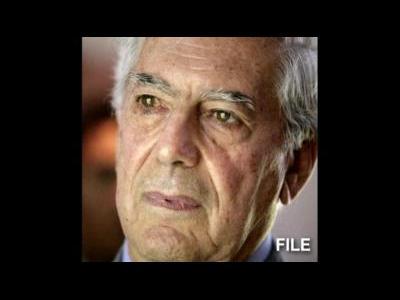
STOCKHOLM – Peruvian Mario Vargas Llosa won the 2010 Nobel Prize in literature on Thursday as the academy honored one of the Spanish-speaking world's most acclaimed authors and an outspoken political activist who once ran for president in his tumultuous homeland.
Vargas Llosa, 74, has written more than 30 novels, plays and essays, including "Conversation in the Cathedral" and "The Green House." In 1995, he won the Cervantes Prize, the most distinguished literary honor in Spanish.
He is the first South American winner of the prestigious 10 million kronor ($1.5 million) Nobel literature prize since Colombian writer Gabriel Garcia Marquez won in 1982 and the first Spanish-language writer to win since Mexico's Octavio Paz in 1990.
"I am very grateful to the Swedish Academy. It is totally unexpected, a real surprise," Vargas Llosa told reporters in New York. "I think it is, for any writer, a great encouragement, a recognition of a world."
The Swedish Academy said it honored him for mapping the "structures of power and (for) his trenchant images of the individual's resistance, revolt and defeat." Its permanent secretary, Peter Englund, called him "a divinely gifted storyteller" whose writing touched the reader.
"His books are often very complex in composition, having different perspectives, different voices and different time places," Englund said. "He is also doing it in a new way, he has helped evolve the art of the narration."
Peru's president, Alan Garcia, praised Vargas Llosa for his "eminent intelligence" and "libertarian and democratic spirit."
"(This award is) an enormous act of justice that in truth we have been waiting for since our youth," Garcia said.

El instituto de Educación Secundaria “La Marina”, de Santa Cruz de Bezana, ha participado recientemente en una nueva reunión de evaluación del proyecto Comenius: E- Read. Coordinada desde el propio centro, esta actuación forma parte de las abundantes y variadas actividades que el instituto está llevando a cabo relativas al tema del fomento de la lectura y escritura.
En este proyecto Comenius participan centros educativos de Irlanda (Carndonagh Community School) y Alemania (Werkmeister Gymnasium) y se coordina desde el IES La Marina, en España. A lo largo de este segundo año se continuarán trabajando conjuntamente diferentes temas: la competencia lingüística y digital, la competencia lectora, el funcionamiento de las bibliotecas escolares y otros múltiples aspectos que reflejan los intereses e iniciativas de de profesores, alumnado y familias de los centros colaboradores.
Este reciente encuentro ha servido para revisar, especificar los objetivos y consensuar, coordinar y plantear las distintas actividades que se desarrollarán a lo largo del calendario de trabajo de este segundo año de funcionamiento de la asociación escolar.
El proyecto del IES La Marina concibe la lectura y escritura como ejes centrales de trabajo, en consonancia con los objetivos del Plan Lector que se viene desarrollando desde hace varios cursos en nuestro centro. El IES La Marina es uno de los centros educativos de Cantabria que cuenta con un proyecto europeo de asociación escolar del que, además, es coordinador. Para mayor información, les invitamos a visitar la web del proyecto: http://comenius-e-read.blogspot.com/ y http://www.iesbezana.org/web-ies/comenius/eread.htm
The following piece is contributed by Donegal historian and author, Seán Beattie (on right in photo). He was a teacher and counsellor at Carndonagh Community School. To the left in photo is Nobel Prize winner, John Hume. Seán certainly ranks among distinguished colleagues...he went to school with another Nobel Prize winner, Seamus Heaney!
The art of poetry made the front pages in Ireland recently as Dublin poet, Harry Clifton was awarded the title of Ireland Professor of Poetry for the next three years. The awarding of such a position may seem a small matter nationally and internationally, but if you consider some of the past poets of Ireland whom he now represents - Yeats, Kavanagh, Wilde, Joyce - he certainly has considerable responsibility. However, raising the profile of contemporary poetry will probably be his biggest challenge. The main aim of the position is to help maintain the value of poetry in Irish culture, both at home and abroad. One of the trustees of the position, Seamus Heaney is a Nobel Prize winner in Literature. Harry is in good company!
By Ulrich Baron http://www.spiegel.de/international/zeitgeist/0,1518,654063,00.html
Every year, the Nobel Prize for literature is a source of surprises. This year's shocker? The committee's choice isn't much of a surprise at all. From publishers to critics, most agreed that Herta Müller was a good candidate for the award. Indeed, thanks to her most recent novel "Atemschaukel," (the working title of the English translation is "Everything I Have I Carry with Me." An English excerpt can be read here) she is also on the shortlist to receive the 2009 German Book Prize, which will be awarded at the Frankfurt Book Fair next week.
It wasn't long, however, before pressure from the Romanian secret service became intolerable, and in 1985 she applied to leave the country. Since then, aside from brief stints as "writer in residence" at a number of universities in Europe and the United States, she has lived in Germany.
Yet Müller's language is different -- and not just because she comes from a German enclave that spent centuries developing its own German dialect. Rather, her language is bold and up front, as though she were obsessed with using it a bit differently than it is normally used.
Writing against Terror
The band of prose she wrote in West Berlin, "Traveling on One Leg," describes leaving one country called home and arriving in another. Müller confronts readers with the alien world of the Ceausescu regime, but also with the alienation in her own life.
Life under totalitarian rule was also a central theme in her novel "Even Back Then, the Fox Was a Hunter" (1992), "The Land of the Green Plums" (1995) and "The Appointment" (1997). She wrote about the aftermath of her Romanian experiences in "Hunger and Silk" (1995).
With "A Lady Lives in the Hair Knot" (2000), Herta Müller collects collages for a headstrong poetry album, which depart from the nadirs of life like children's rhymes and rythmic verses.
The literary creations in her latest work are also lined with a sort of childish linguistic charm -- she originally wanted to write about the experiences in a Soviet gulag of her deceased colleague Oscar Pastior. Her books have titles that almost seem to come together in unison against the hunger, death and darkness that are themes in those novels. As if they can't bear alone all that they want to say.
Communicating without Boundaries
You can of course disagree with both the eulogists of "Everything I Have, I Carry with Me," and also with the decision made in Stockholm. One complaint is that the content and qualities that have been praised and rewarded here could also have been discovered and rewarded in works of contemporary Chinese literature.
It could send out an impulse for the the concept of a Central Europe that has been placed on the sidelines through the Yugoslavian tragedy and European Union expansion. A concept in which identities aren't determined by nation-states, but rather through cultural ties.
If the Nobel literature prize has succeeded in that, then we would have Herta Müller to thank.

Portuguese novelist Jose Saramago, who won the Nobel Prize for literature in 1998, has died at the age of 87. (BBC News
Saramago, a communist and atheist, only began to become recognised for his work in his fifties.
One of his best-known novels is Blindness, written in 1995, which tells the story of a country whose entire population lose their sight.
He had been due to appear at Edinburgh's book festival in August.
Saramago moved to Lanzarote in the early 1990s after opposition from Portugal's right-wing government to his controversial work The Gospel According to Jesus Christ.
The administration barred his work from being entered in the European Literary Prize on the grounds that it was offensive to Catholics.
International acclaimHis first novel, published in 1947, was the commercially unsuccessful Terra do Pecado - or Country of Sin - a tale of peasants in crisis.
Saramago speaking last yearEvery time I finish a book I wait for another idea, it may not come this time, we shall see
He returned to fiction later in his life and first won international acclaim with 1983 fantasy Memorial do Convento - published in English in 1988 as Baltasar and Blimunda.
Saramago's final book, Caim - with the English title Cain - was published at the end of last year.
Earlier in the year, El Cuaderno, or The Notebook - a compilation of blog entries including criticism of Tony Blair and the Pope - was published.
Speaking to BBC News last June, Saramago said: "I may have three, four years more to live, maybe less.
"Every time I finish a book I wait for another idea, it may not come this time, we shall see."