Niña inocente, pequeña traviesa
Brincas, cantas, bailas
Ignoras tu dislexia
Haces travesuras, te ríes, ilusionas
No aprendes a escribir, deletreas, desesperas
tu escritura está en reversa
no cuentas, no sumas, no restas
te equivocas
los números inviertes, los signos no entiendes
Hemisferio norte, hemisferio sur
forman parte de tu incomprensible cerebro
¿No sé qué pasa?, se quedan neutros
No lees, no cuentas, te equivocas
Desesperas, lloras
Analfabeta, ¡tonta! te juzgan y reprochan
Te abrigas en mis brazos
Tu tembloroso cuerpo frágil y pequeño está agitado
Mitigo tu ira, la tristeza me agobia
Sufres el dolor que atormenta la búsqueda incesante
De tus números y letras
Escribes palabras incoherentes
¡No te rindes¡ el coraje te levanta
Eres un mar,
Sediento de lecturas fantasiosas
Arrastras el lápiz,
Imaginando que estas escribiendo
Cuentos de hadas, de duendes y fantasmas
Ante la soberbia ciega de tus palabras
Niña inocente, pequeña traviesa
“Algo anda mal en tu cerebro”
Parecías ser normal como otros niños
Pero no eres como ellos.
Tuesday, 22 June 2010

Monday, 21 June 2010
présentation d'un livre
Buchvorstellung
J`ai réfléchi longtemps quel livre je prends, mais je me suis décidée pour ce livre « Julias Einschlafbuch ». L’auteur est Doris Wiederhold. Elle est très inconnue et elle a écrit seulement 4 livres ! Le livre s´agit d´une petite fille qui ne veut jamais aller au lit. Pour cette raison sa mère lui raconte beaucoup d´ histoires .Elle raconte des autres pays et comme les enfants y dorment.
La mère décrit la vie dans le désert, dans le nord et dans la forêt.
J´aime ce livre parce qu’on apprend beaucoup, des autres pays et parce que je préférais ce livre aux autres quand j´étais petite.
« Julies Lieblingsessen » est aussi un livre de Doris Wiederhold. Ces deux livre étaient un cadeau de mes grands-parents. Ils sont pour des enfants qui ont quatre ou cinq ans.
julia französische werkmeister WGN 8a
J`ai réfléchi longtemps quel livre je prends, mais je me suis décidée pour ce livre « Julias Einschlafbuch ». L’auteur est Doris Wiederhold. Elle est très inconnue et elle a écrit seulement 4 livres ! Le livre s´agit d´une petite fille qui ne veut jamais aller au lit. Pour cette raison sa mère lui raconte beaucoup d´ histoires .Elle raconte des autres pays et comme les enfants y dorment.
La mère décrit la vie dans le désert, dans le nord et dans la forêt.
J´aime ce livre parce qu’on apprend beaucoup, des autres pays et parce que je préférais ce livre aux autres quand j´étais petite.
« Julies Lieblingsessen » est aussi un livre de Doris Wiederhold. Ces deux livre étaient un cadeau de mes grands-parents. Ils sont pour des enfants qui ont quatre ou cinq ans.
julia französische werkmeister WGN 8a
présentation d'un livre
Glennkill
J’ai choisi le livre « Glennkill » de Leonie Swann. Elle était née en 1975 près de Munich. Maintenant elle habite à Berlin. Glennkill a été son première livre et elle a l’écrit parce qu’elle a été à l’Irlande et là-bas elle a fait la connaissance des moutons. L’idée pour le livre lui est venue dans la tête à Paris, où elle rêvait de la campagne et des moutons.
Le livre Glennkill s’agit d’un berger, qui est assassiné et de son troupeau des moutons, qui veulent trouver le meurtrier, parce que le berger George Glenn a lu des polars aux moutons. Voilà pourquoi le troupeau sait ce qu’il doit faire. Pendant qu’ils cherchent le meurtrier, ils font beaucoup de choses drôles …
La suite du livre est « Garou », où ils sont en France.
J’aime le livre parce que c’est drôle comme les moutons tentent de trouver le meurtrier.
Svenja 8a französischeWerkmeister
J’ai choisi le livre « Glennkill » de Leonie Swann. Elle était née en 1975 près de Munich. Maintenant elle habite à Berlin. Glennkill a été son première livre et elle a l’écrit parce qu’elle a été à l’Irlande et là-bas elle a fait la connaissance des moutons. L’idée pour le livre lui est venue dans la tête à Paris, où elle rêvait de la campagne et des moutons.
Le livre Glennkill s’agit d’un berger, qui est assassiné et de son troupeau des moutons, qui veulent trouver le meurtrier, parce que le berger George Glenn a lu des polars aux moutons. Voilà pourquoi le troupeau sait ce qu’il doit faire. Pendant qu’ils cherchent le meurtrier, ils font beaucoup de choses drôles …
La suite du livre est « Garou », où ils sont en France.
J’aime le livre parce que c’est drôle comme les moutons tentent de trouver le meurtrier.
Svenja 8a französischeWerkmeister
Saturday, 19 June 2010
Novelist Jose Saramago Dead at 87

Portuguese novelist Jose Saramago, who won the Nobel Prize for literature in 1998, has died at the age of 87. (BBC News
Saramago, a communist and atheist, only began to become recognised for his work in his fifties.
One of his best-known novels is Blindness, written in 1995, which tells the story of a country whose entire population lose their sight.
He had been due to appear at Edinburgh's book festival in August.
Saramago moved to Lanzarote in the early 1990s after opposition from Portugal's right-wing government to his controversial work The Gospel According to Jesus Christ.
The administration barred his work from being entered in the European Literary Prize on the grounds that it was offensive to Catholics.
International acclaimHis first novel, published in 1947, was the commercially unsuccessful Terra do Pecado - or Country of Sin - a tale of peasants in crisis.
Saramago speaking last yearEvery time I finish a book I wait for another idea, it may not come this time, we shall see
He returned to fiction later in his life and first won international acclaim with 1983 fantasy Memorial do Convento - published in English in 1988 as Baltasar and Blimunda.
Saramago's final book, Caim - with the English title Cain - was published at the end of last year.
Earlier in the year, El Cuaderno, or The Notebook - a compilation of blog entries including criticism of Tony Blair and the Pope - was published.
Speaking to BBC News last June, Saramago said: "I may have three, four years more to live, maybe less.
"Every time I finish a book I wait for another idea, it may not come this time, we shall see."
Thursday, 17 June 2010
présentation d'un livre
Das doppelte Lottchen
J’ai choisi le livre « Das doppelte Lottchen » d’Erich Kästner, qui vivait de 1899 à 1974. Il était un auteur célèbre des livres d’enfants.
Dans le livre il y a deux petites filles de huit ans, qui s’appellent Louise et Lotte. Elles restent pendant leurs vacances avec d’autres enfants dans un centre de vacances. Les deux ne se connaissent pas, c’était le premier rencontre. Mais, c’est bizarre : leur aspect physique est exactement le même! Les deux sont choquées, mais bientôt elles découvrent qu’elles sont des sœurs! Des vraies jumelles! Mais les deux ne se comprennent pas. Elles ont mille questions : Pourquoi les parents se sont-ils séparés ? Et, avant tout : pourquoi les deux filles étaient-elles séparées ? Lotte et Louise font un plan : Elles changent les rôles ! Louise va à Munich chez la mère et Lotte va à Wien chez le père. Mais ça ne marche pas toujours comme voulu et bientôt les filles tirent un nouveau plan …
J’ai choisi le livre parce que c’est un de mes premiers livres et je trouve l’histoire aujourd'hui même très jolie.
Susanne 8a französischeWerkmeister
J’ai choisi le livre « Das doppelte Lottchen » d’Erich Kästner, qui vivait de 1899 à 1974. Il était un auteur célèbre des livres d’enfants.
Dans le livre il y a deux petites filles de huit ans, qui s’appellent Louise et Lotte. Elles restent pendant leurs vacances avec d’autres enfants dans un centre de vacances. Les deux ne se connaissent pas, c’était le premier rencontre. Mais, c’est bizarre : leur aspect physique est exactement le même! Les deux sont choquées, mais bientôt elles découvrent qu’elles sont des sœurs! Des vraies jumelles! Mais les deux ne se comprennent pas. Elles ont mille questions : Pourquoi les parents se sont-ils séparés ? Et, avant tout : pourquoi les deux filles étaient-elles séparées ? Lotte et Louise font un plan : Elles changent les rôles ! Louise va à Munich chez la mère et Lotte va à Wien chez le père. Mais ça ne marche pas toujours comme voulu et bientôt les filles tirent un nouveau plan …
J’ai choisi le livre parce que c’est un de mes premiers livres et je trouve l’histoire aujourd'hui même très jolie.
Susanne 8a französischeWerkmeister
présentation d'un livre
Un des mes livres préférés est une bande dessinée qui s’appelle « Comment Obélix est tombé dans la marmite du druide quand il était petit » des auteurs connus René Goscinny et Albert Uderzo. Tous les lecteurs qui connaissent les livres d’Astérix savent qu’Obélix est très fort parce qu’il était tombé dans la marmite du druide quand il était petit. Cette parution extraordinaire explique comment cela s’est passé. On voyage dans le passé quand Obélix et tous les autres Gaulois célèbres étaient des enfants. On retrouve par exemple Assurancetourix, qui veut devenir barde, Cétautomatix, dont le père fabriquait les armes et bien sûr Astérix, le meilleur ami d’Obélix. A l’époque, Obélix n’était pas fort, il aimait même pleurer. Quand les enfants du village jouaient « attaque des Romains », c’était toujours Obélix, qui devait jouer le gros de la troupe ennemie. Comme un jour il n’avait plus envie de se faire battre, Astérix a tiré un plan …
J’adore les livres d’Astérix en général, parce que les histoires sont conçues pour les grands aussi que pour les petits. On apprend – garni avec beaucoup d’humour - un peu l’histoire de l’occupation de la Gaule par les troupes de Jules César, on peut s’identifier avec ce groupe de Gaulois qui résistent aux essais des Romains de prendre le petit village. Dans les livres on trouve beaucoup de jeux de mots et des allusions concernant des sujets de la politique actuelle. C’est aussi le cas dans le livre présenté ci-dessus, mais il y a une différence en ce qui concerne l’illustration : Il ne s’agit pas d’une vraie bande dessinée : Les grands images s’étendent sur toute la page ou même deux, dessinés en style d’aquarelles et le texte est narratif et se ne trouve pas dans des bulles.
J’adore les livres d’Astérix en général, parce que les histoires sont conçues pour les grands aussi que pour les petits. On apprend – garni avec beaucoup d’humour - un peu l’histoire de l’occupation de la Gaule par les troupes de Jules César, on peut s’identifier avec ce groupe de Gaulois qui résistent aux essais des Romains de prendre le petit village. Dans les livres on trouve beaucoup de jeux de mots et des allusions concernant des sujets de la politique actuelle. C’est aussi le cas dans le livre présenté ci-dessus, mais il y a une différence en ce qui concerne l’illustration : Il ne s’agit pas d’une vraie bande dessinée : Les grands images s’étendent sur toute la page ou même deux, dessinés en style d’aquarelles et le texte est narratif et se ne trouve pas dans des bulles.
présentation d'un livre
Michel aus Lönneberga.
( Michel de Lönneberga)
Maintenant je présente le livre Michel aus Lönneberga
L´auteur est Astrid Lindgren qui est un auteur très connue. Elle a écrit beaucoup de livres pour les enfants par exemple Pipi Langstrumpf ou Kinder von Bullerbü.
Dans l’histoire il y a un petit lutin qui s’appelle Michel qui fait beaucoup de bêtises drôles que sa famille ne trouve pas toujours amusantes.
Michel a un très bon copain qui s’appelle Alfred. Alfred aide la famille et il a 38 ans. Michel a aussi une sœur et une grand -mère drôle. La mère aime Michel, mais le père n’aime pas Michel. Apres avoir fait une plaisanterie il est toujours puni par son père.
Il y a aussi un film de Michel aus Lönneberga que j’aime bien.
J’aime bien le livre parce que ce très amusant et ça fait beaucoup rire. Je pense qu’Astrid Lindgren écrit un style naturel qui me plaît beaucoup.
MfG Georg Fischer Französische Werkmeister Gymnasium Neresheim Klasse 8a
( Michel de Lönneberga)
Maintenant je présente le livre Michel aus Lönneberga
L´auteur est Astrid Lindgren qui est un auteur très connue. Elle a écrit beaucoup de livres pour les enfants par exemple Pipi Langstrumpf ou Kinder von Bullerbü.
Dans l’histoire il y a un petit lutin qui s’appelle Michel qui fait beaucoup de bêtises drôles que sa famille ne trouve pas toujours amusantes.
Michel a un très bon copain qui s’appelle Alfred. Alfred aide la famille et il a 38 ans. Michel a aussi une sœur et une grand -mère drôle. La mère aime Michel, mais le père n’aime pas Michel. Apres avoir fait une plaisanterie il est toujours puni par son père.
Il y a aussi un film de Michel aus Lönneberga que j’aime bien.
J’aime bien le livre parce que ce très amusant et ça fait beaucoup rire. Je pense qu’Astrid Lindgren écrit un style naturel qui me plaît beaucoup.
MfG Georg Fischer Französische Werkmeister Gymnasium Neresheim Klasse 8a
Wednesday, 9 June 2010
The strange book
The strange book
One day Peter and John were going home after the school. They were students of La Marina High School in Bezana. When they were near an old house they saw a book in the middle of the street. The book was very old and it had a lot of dust. They touched the book and immediately they were in the same place but two hundred years ago. They tried to touch the book again but nothing happened.
The old house was a library. They went into the library and they saw an old place, there were some tables and some books. They asked the people if they had seen the book that they had. A man said that he saw that book in the church of the village.
They went to the church and after they went to their homes. In this year there were only some caws and sheeps. The church was far from there so they walked for a long time. When they were walking they saw that the village was little, there were only twenty small houses, the church, the library and some farms in the nearer fields. The citizens were afraid because Peter and John were wearing strange clothes so they didn’t speak with them.
When they arrived to the church a priest received them. They asked him about the book. The priest went with them to the church’s library. It did not have a lot of books and they were bigger than a normal book. They found the book in a table with some other books. They touched the book again. They didn’t feel anything but the priest wasn’t now with them and they were in the middle of a street. They asked a woman for the year. They were again in 2009.
Pablo Fernández Alonso 3ºB
One day Peter and John were going home after the school. They were students of La Marina High School in Bezana. When they were near an old house they saw a book in the middle of the street. The book was very old and it had a lot of dust. They touched the book and immediately they were in the same place but two hundred years ago. They tried to touch the book again but nothing happened.
The old house was a library. They went into the library and they saw an old place, there were some tables and some books. They asked the people if they had seen the book that they had. A man said that he saw that book in the church of the village.
They went to the church and after they went to their homes. In this year there were only some caws and sheeps. The church was far from there so they walked for a long time. When they were walking they saw that the village was little, there were only twenty small houses, the church, the library and some farms in the nearer fields. The citizens were afraid because Peter and John were wearing strange clothes so they didn’t speak with them.
When they arrived to the church a priest received them. They asked him about the book. The priest went with them to the church’s library. It did not have a lot of books and they were bigger than a normal book. They found the book in a table with some other books. They touched the book again. They didn’t feel anything but the priest wasn’t now with them and they were in the middle of a street. They asked a woman for the year. They were again in 2009.
Pablo Fernández Alonso 3ºB
Tuesday, 8 June 2010
Antigone without words
Check out this SlideShare Presentation: Class 12 of Werkmeister Gymnasium read Sophokles' Antigone and created a photostory without words.
Präsentation 3
View more presentations from Edwin Löfflad.
Monday, 7 June 2010
MY LIBRARY by Santi Sañudo
My Library
Hi, my name is Santi. I’m fourteen years old and I live in Bezana. I’ve got a small library in my bedroom. It’s not too big, it’s about 100 books. Some of them are from I was a child. The newest are more or less big. They’ve got among 600 pages. Most of them are adventure books with a little fantastic touch. I usually buy my books from a magazine called “The Readers Circle”. It’s got the newest book and they are cheaper than a normal book if you it in the book shop.
My favourite book is Eragon, it’s got two books more to continue the story and the writer is writing the last book, The Empire. The books are about a farmer who works to survive in a world dominated by the evil Empire. Eragon discovers a dragon egg and his life changes completely. His feature and himself becomes interesting when he meets his dragon, Shaphira. He makes alliances with draws and more fantastic creatures to destroy The Empire. This is one of the books most excited I’ve ever red in my life. I recommended to you, it’s got action, magic, a very little love and so much funny! You will enjoy it.
His writer is Christopher Paolini, he’s one of the most younguest writers who had sold so much books. His is form United States, Montana. He was born on the 17 of November of 1983. He actually had written the trilogy of Eragon and he is writing the next book and the end of the story, it is called The Empire.
Santi Sañudo 3º ESO-D
Hi, my name is Santi. I’m fourteen years old and I live in Bezana. I’ve got a small library in my bedroom. It’s not too big, it’s about 100 books. Some of them are from I was a child. The newest are more or less big. They’ve got among 600 pages. Most of them are adventure books with a little fantastic touch. I usually buy my books from a magazine called “The Readers Circle”. It’s got the newest book and they are cheaper than a normal book if you it in the book shop.
My favourite book is Eragon, it’s got two books more to continue the story and the writer is writing the last book, The Empire. The books are about a farmer who works to survive in a world dominated by the evil Empire. Eragon discovers a dragon egg and his life changes completely. His feature and himself becomes interesting when he meets his dragon, Shaphira. He makes alliances with draws and more fantastic creatures to destroy The Empire. This is one of the books most excited I’ve ever red in my life. I recommended to you, it’s got action, magic, a very little love and so much funny! You will enjoy it.
His writer is Christopher Paolini, he’s one of the most younguest writers who had sold so much books. His is form United States, Montana. He was born on the 17 of November of 1983. He actually had written the trilogy of Eragon and he is writing the next book and the end of the story, it is called The Empire.
Santi Sañudo 3º ESO-D
Thursday, 3 June 2010
Reading & poetry by Rosa
On behalf of La Marina Students' with Special needs.
Sabes, leer es soñar,
y un buen amigo suele afirmar,
que leyendo te vas a enamorar.
A leer te queremos ayudar
y miles de razones te vamos a dar:
lee para saber
y el mundo comprender,
para detener el tiempo
y volar por momentos,
para reír
y para compartir,
para llorar
y para olvidar,
para viajar a otro tiempo
y conocer el Universo,
para dormir
y para poderte evadir,
para conocer a los demás
y para imaginar,
para crecer
y para no desfallecer,
¡Lo tienes que conseguir!
¡No te desanimes!
¡Y déjate seducir!
Alumnos de Educación Especial 1º y 2º de ESO
Sabes, leer es soñar,
y un buen amigo suele afirmar,
que leyendo te vas a enamorar.
A leer te queremos ayudar
y miles de razones te vamos a dar:
lee para saber
y el mundo comprender,
para detener el tiempo
y volar por momentos,
para reír
y para compartir,
para llorar
y para olvidar,
para viajar a otro tiempo
y conocer el Universo,
para dormir
y para poderte evadir,
para conocer a los demás
y para imaginar,
para crecer
y para no desfallecer,
¡Lo tienes que conseguir!
¡No te desanimes!
¡Y déjate seducir!
Alumnos de Educación Especial 1º y 2º de ESO
Friday, 21 May 2010
Scenes of Reading by Fernando Abascal

(On behalf of the Coordinating Sapnish school librarian, Fernando Abascal)
Escenas de lectura
I:
Una biblioteca pública en Nueva York. La luz atraviesa los grandes ventanales, se posa sobre los libros, las mesas, el embarnizado suelo de madera. Afuera, el pasar de los coches, la extraña e incansable circulación del mundo.
Una anciana lee. Permanece sentada con las rodillas muy juntas. Sostiene el libro con firmeza, pero pasa las páginas como si fueran frágiles cristales, con una articulada y oriental lentitud. Acerca los ojos a lo que lee. Yo la miro y su imagen se desvanece.
Leer es irse.
II:
Un monje ciego esparce un veneno mortal entre las páginas de un libro a su vez venenoso: la “Poética” de Aristóteles. Es Umberto Eco el que nos cuenta en “El nombre de la rosa” la doble perversión de ese monje: eliminar un libro potencialmente peligroso y, a la vez, aniquilar a quien lo lee.
Ese monje encarna los poderosos tósigos que controlan la lectura o el saber; vela para que no se transgredan los límites; vigila para que determinados libros, esos que han cambiado y cambian la conciencia del mundo, no nos despierten de nuestro “feliz” y “entrenido” letargo.
Leer y escribir para trans - formar, para con - mover.
III:
Rousseau determinó que la única lectura de su “Emilio” fuera el “Robinson Crusoe” a fin de que el protagonista fuera lo bastante maduro para entregarse, sin riesgos, a la literatura. Descartes, en la primera parte de su “Discurso del Método”, escrita en clave autobiográfica, muestra una gran desconfianza hacia todo lo que se ha aprendido en los libros como “método” o camino de acceso al conocimiento o a la virtud.
En ambos casos, tanto la condena cartesiana de la literatura como la desconfianza que manifiesta Rousseau ante las lecturas peligrosas, nos recuerdan la expulsión platónica de los poetas. En el orden racional que Platón nos describe en su República no caben los poetas, pues tenían un papel privilegiado en la formación de las personas, en el buen orden del alma de los ciudadanos.
Domesticada la literatura por la gigantesca maquinaria cultural, ya no será necesario expulsar al escritor, al poeta; será suficiente con asimilarlo al precio de una servidumbre.
Leamos a los que no sirven.
I:
Una biblioteca pública en Nueva York. La luz atraviesa los grandes ventanales, se posa sobre los libros, las mesas, el embarnizado suelo de madera. Afuera, el pasar de los coches, la extraña e incansable circulación del mundo.
Una anciana lee. Permanece sentada con las rodillas muy juntas. Sostiene el libro con firmeza, pero pasa las páginas como si fueran frágiles cristales, con una articulada y oriental lentitud. Acerca los ojos a lo que lee. Yo la miro y su imagen se desvanece.
Leer es irse.
II:
Un monje ciego esparce un veneno mortal entre las páginas de un libro a su vez venenoso: la “Poética” de Aristóteles. Es Umberto Eco el que nos cuenta en “El nombre de la rosa” la doble perversión de ese monje: eliminar un libro potencialmente peligroso y, a la vez, aniquilar a quien lo lee.
Ese monje encarna los poderosos tósigos que controlan la lectura o el saber; vela para que no se transgredan los límites; vigila para que determinados libros, esos que han cambiado y cambian la conciencia del mundo, no nos despierten de nuestro “feliz” y “entrenido” letargo.
Leer y escribir para trans - formar, para con - mover.
III:
Rousseau determinó que la única lectura de su “Emilio” fuera el “Robinson Crusoe” a fin de que el protagonista fuera lo bastante maduro para entregarse, sin riesgos, a la literatura. Descartes, en la primera parte de su “Discurso del Método”, escrita en clave autobiográfica, muestra una gran desconfianza hacia todo lo que se ha aprendido en los libros como “método” o camino de acceso al conocimiento o a la virtud.
En ambos casos, tanto la condena cartesiana de la literatura como la desconfianza que manifiesta Rousseau ante las lecturas peligrosas, nos recuerdan la expulsión platónica de los poetas. En el orden racional que Platón nos describe en su República no caben los poetas, pues tenían un papel privilegiado en la formación de las personas, en el buen orden del alma de los ciudadanos.
Domesticada la literatura por la gigantesca maquinaria cultural, ya no será necesario expulsar al escritor, al poeta; será suficiente con asimilarlo al precio de una servidumbre.
Leamos a los que no sirven.
IV:
Dice Maurice Blanchot: “...lo que más amenaza la lectura: la realidad del lector, su personalidad, su inmodestia, su manera encarnizada de querer seguir siendo él mismo frente a lo que lee, de querer ser un hombre que sabe leer en general”.
Y es que un buen lector no es arrogante, no se apropia de la lectura, no la reduce a su medida, sino que se embarca en una nave sin destino, dispuesto a oír lo que no sabe, a “ponerse a la escucha” y dejarse atravesar por una invisible lanza; a no permanecer ajeno e impasible; a no ser un mero espectador que persigue un placer intrascendente e instantáneo. Steiner lo dice con maestría: “leer bien significa arriesgarse a mucho. Es dejar vulnerable nuestra identidad, nuestra posesión de nosotros mismos”.
No leamos como está mandado.
V:
Empaña con su aliento el cristal de la ventanilla. El tren silba al entrar en un túnel y la luz se enciende en el vagón. Estoy sentado frente a ella. Se abre de nuevo el paisaje. La niña dibuja con su minúsculo dedo algo parecido a letras irreconocibles. Afuera llueve. Me fijo en esos rasgos, ahora atravesados por estriadas gotas de lluvia.
Cuando escribo, yo también empaño con mi aliento la página en blanco.
VI:
Nietzsche en el prólogo de “Aurora“ exigía a los que practican el “arte venerable” de la lectura el saber “volverse silenciosos y pausados”. Nuestra época, bulliciosa e hiperactiva, soporta mal el silencio y la lentitud. Nietzsche desconfía de los lectores modernos.
Un caracol lee sobre la hoja de una berza.
VII:
Walter Benjamín reflexiona en su texto “Experiencia y pobreza” sobre la abundancia de estímulos y la penuria de experiencias que caracteriza a nuestro mundo. Tenemos el conocimiento, pero como algo externo a nosotros, como un útil o una mercancía.
Cada vez sabemos más, pero no cambiamos con lo que sabemos.
VIII:
A los 78 años aprendió a leer. Aquel maestro le enseñó lo que ella siempre había querido. Leyó un libro, muy, muy despacio, silabeando cada palabra, deteniéndose en cada punto, en cada coma. Cuando finalizó la lectura, entre satisfecha y triste, se presentó ante el maestro y le dijo: ahora, enséñeme a leer otro libro.
Nunca dejamos de aprender a leer.
Dice Maurice Blanchot: “...lo que más amenaza la lectura: la realidad del lector, su personalidad, su inmodestia, su manera encarnizada de querer seguir siendo él mismo frente a lo que lee, de querer ser un hombre que sabe leer en general”.
Y es que un buen lector no es arrogante, no se apropia de la lectura, no la reduce a su medida, sino que se embarca en una nave sin destino, dispuesto a oír lo que no sabe, a “ponerse a la escucha” y dejarse atravesar por una invisible lanza; a no permanecer ajeno e impasible; a no ser un mero espectador que persigue un placer intrascendente e instantáneo. Steiner lo dice con maestría: “leer bien significa arriesgarse a mucho. Es dejar vulnerable nuestra identidad, nuestra posesión de nosotros mismos”.
No leamos como está mandado.
V:
Empaña con su aliento el cristal de la ventanilla. El tren silba al entrar en un túnel y la luz se enciende en el vagón. Estoy sentado frente a ella. Se abre de nuevo el paisaje. La niña dibuja con su minúsculo dedo algo parecido a letras irreconocibles. Afuera llueve. Me fijo en esos rasgos, ahora atravesados por estriadas gotas de lluvia.
Cuando escribo, yo también empaño con mi aliento la página en blanco.
VI:
Nietzsche en el prólogo de “Aurora“ exigía a los que practican el “arte venerable” de la lectura el saber “volverse silenciosos y pausados”. Nuestra época, bulliciosa e hiperactiva, soporta mal el silencio y la lentitud. Nietzsche desconfía de los lectores modernos.
Un caracol lee sobre la hoja de una berza.
VII:
Walter Benjamín reflexiona en su texto “Experiencia y pobreza” sobre la abundancia de estímulos y la penuria de experiencias que caracteriza a nuestro mundo. Tenemos el conocimiento, pero como algo externo a nosotros, como un útil o una mercancía.
Cada vez sabemos más, pero no cambiamos con lo que sabemos.
VIII:
A los 78 años aprendió a leer. Aquel maestro le enseñó lo que ella siempre había querido. Leyó un libro, muy, muy despacio, silabeando cada palabra, deteniéndose en cada punto, en cada coma. Cuando finalizó la lectura, entre satisfecha y triste, se presentó ante el maestro y le dijo: ahora, enséñeme a leer otro libro.
Nunca dejamos de aprender a leer.
IX :
Los platos y los vasos en su sitio, el orden final de la cocina. Ella extiende la manta de planchar sobre el fogón, muy cerca del horno aún caliente. Ambos sentados con los pies colgando, había algo de juego en esa postura. Abre la cartilla, hoy toca la “d”. Leo dado, dedo, diente, docena, duna. Tengo cuatro años, casi cinco.
El índice de su mano recorre los renglones. Sigo la curva de su uña, parece el rabillo de una letra, un extraño esmalte que une las palabras. No hay apenas significado, sólo percutida música de las sílabas y el tic-tac del reloj del pasillo que se repite incansable en su caja de madera.
Pasa el tiempo y oscurecen los azulejos. Las letras salen del dedo, de la mano, del brazo, del seno, de los labios de mi madre. Y a mi boca llegan como una lenta succión para hacerse nombre, sola palabra.
De niños leemos con el cuerpo.
X :
Encorvado como si se buscase a sí mismo, una manera de defenderse. Apenas se podía ver el libro que tenía en las manos. A veces emitía una mínima exclamación y luego volvía a leer en el silencio del parque, del agua estancada. En un momento dejó de leer. Creo que me vio. Cerró el libro e hizo un amago de levantarse del banco e irse, pero no, permaneció allí, sentado y encorvado sobre sí mismo, en una posición de espera, con el libro cerrado en las manos, como si temiera que la luz de la tarde velara lo escrito o las palabras escapasen hacia las copas de los árboles. Me pareció que continuaba leyendo aquel libro cerrado cuando me fui.
Leemos lo que ya hemos leído.
XI :
Una mujer joven lee una carta frente a la claridad de una ventana abierta. Vermeer nos muestra la luz que atraviesa el irregular cristal emplomado y se esparce por la habitación en penumbra. La mujer está inmersa en la lectura, tiene los labios separados, como si paladeara lo que lee, como si leyendo se oyese a sí misma.
Hay demasiada separación entre sus grandes ojos y las manos que sostienen con firmeza el arrugado papel. Advertimos en ello el germinar de una pasión que aún no exige cercanía, un cierto refreno, acaso las marchitas razones de la prudencia.
En primer plano, el pintor nos enseña diversas frutas, manzanas y melocotones, en una bandeja inclinada sobre un tapiz, tal vez una simbología de la voluptuosa mordedura del pecado original. A la derecha, una cortina o telón de un verde amarillento y sostenida por una barra transversal nos permite “ver” la escena, mostrar el cuadro. Todo revela atención y sugiere una soledad impuesta, pero a la vez un deseo de abrirse al desorden del mundo: la claridad fugitiva que entra por la ventana; la fruta y el tapiz descuidados; la secreta convulsión de quien a solas lee y tal vez se oye leer.
Llueve en Dresde. A la salida del museo donde se puede ver este bellísimo óleo de Vermeer, otra mujer lee un plano de la ciudad, reduce con sus manos la rebeldía del desplegable y mueve los labios, una manera de confirmar lo leído. En el escaparate de una frutería cercana brillan unas manzanas rojas y los parabrisas de los coches van y vienen de un lado a otro. Más allá, la claridad repentina de un semáforo. Así la vida.Leemos para atravesar las calles del tiempo.
Los platos y los vasos en su sitio, el orden final de la cocina. Ella extiende la manta de planchar sobre el fogón, muy cerca del horno aún caliente. Ambos sentados con los pies colgando, había algo de juego en esa postura. Abre la cartilla, hoy toca la “d”. Leo dado, dedo, diente, docena, duna. Tengo cuatro años, casi cinco.
El índice de su mano recorre los renglones. Sigo la curva de su uña, parece el rabillo de una letra, un extraño esmalte que une las palabras. No hay apenas significado, sólo percutida música de las sílabas y el tic-tac del reloj del pasillo que se repite incansable en su caja de madera.
Pasa el tiempo y oscurecen los azulejos. Las letras salen del dedo, de la mano, del brazo, del seno, de los labios de mi madre. Y a mi boca llegan como una lenta succión para hacerse nombre, sola palabra.
De niños leemos con el cuerpo.
X :
Encorvado como si se buscase a sí mismo, una manera de defenderse. Apenas se podía ver el libro que tenía en las manos. A veces emitía una mínima exclamación y luego volvía a leer en el silencio del parque, del agua estancada. En un momento dejó de leer. Creo que me vio. Cerró el libro e hizo un amago de levantarse del banco e irse, pero no, permaneció allí, sentado y encorvado sobre sí mismo, en una posición de espera, con el libro cerrado en las manos, como si temiera que la luz de la tarde velara lo escrito o las palabras escapasen hacia las copas de los árboles. Me pareció que continuaba leyendo aquel libro cerrado cuando me fui.
Leemos lo que ya hemos leído.
XI :
Una mujer joven lee una carta frente a la claridad de una ventana abierta. Vermeer nos muestra la luz que atraviesa el irregular cristal emplomado y se esparce por la habitación en penumbra. La mujer está inmersa en la lectura, tiene los labios separados, como si paladeara lo que lee, como si leyendo se oyese a sí misma.
Hay demasiada separación entre sus grandes ojos y las manos que sostienen con firmeza el arrugado papel. Advertimos en ello el germinar de una pasión que aún no exige cercanía, un cierto refreno, acaso las marchitas razones de la prudencia.
En primer plano, el pintor nos enseña diversas frutas, manzanas y melocotones, en una bandeja inclinada sobre un tapiz, tal vez una simbología de la voluptuosa mordedura del pecado original. A la derecha, una cortina o telón de un verde amarillento y sostenida por una barra transversal nos permite “ver” la escena, mostrar el cuadro. Todo revela atención y sugiere una soledad impuesta, pero a la vez un deseo de abrirse al desorden del mundo: la claridad fugitiva que entra por la ventana; la fruta y el tapiz descuidados; la secreta convulsión de quien a solas lee y tal vez se oye leer.
Llueve en Dresde. A la salida del museo donde se puede ver este bellísimo óleo de Vermeer, otra mujer lee un plano de la ciudad, reduce con sus manos la rebeldía del desplegable y mueve los labios, una manera de confirmar lo leído. En el escaparate de una frutería cercana brillan unas manzanas rojas y los parabrisas de los coches van y vienen de un lado a otro. Más allá, la claridad repentina de un semáforo. Así la vida.Leemos para atravesar las calles del tiempo.
Got an E-Reader by Javier
Here are the results of the competition in which we asked you to create a one-page classroom activity for iT's for Teachers magazine. A big thank-you to everyone who took part in our competition to create a classroom activity for the summer issue of iT's for Teachers. We have chosen one winner and three runners-up, all of whose activities appear in the summer issue of the print magazine and at the site. The winner will receive a Papyre 6.1 e-book reader.
The winner
our competition to create a classroom activity for the summer issue of iT's for Teachers. We have chosen one winner and three runners-up, all of whose activities appear in the summer issue of the print magazine and at the site. The winner will receive a Papyre 6.1 e-book reader. The competition judges were Stephanie Collins, commissioning editor for Cambridge University Press in Spain; Jamie Clement, who heads up the ELT department at Vicens Vives publishing house in Spain; Jane Cadwallader, author of infant and primary materials; Lindsay Clandfield, teacher, teacher trainer and author; and Robert Campbell, editor of iT's for Teachers.
http://www.its-teachers.com/interact/competition/default.asp
The winner
Miniature Earth
by Javier Martínez (IES La Marina, Cantabria, Spain)
Students complete facts to raise their awareness on the important things in life.
Some of the judges’ comments:
“I really like the idea behind this text and project and think it makes for a very interesting and original class idea. Many teachers would really like to address a topic like this, and the video is a bonus.”
“The angle of this activity is original and interesting. It’s educational and critical.”
“The content is fascinating and thought-provoking. I think students would really want to know the right answers to the cloze test (how often does that happen in an ELT activity?!), and it’s a great springboard for discussion.”
“A very well-structured activity which presents the topic in a way that is likely to generate lots of opportunity for discussion and comments. It provides a good model of how YouTube can be tapped as a great resource for lessons.”
For all these reasons, “Miniature Earth” is the overall winner of the competition, and a Papyre 6.1 e-book reader is on its way to Javier Martínez (pictured here).
Tuesday, 18 May 2010
"Untitled"...by Sean Gallagher (Carndonagh CS)
Sean lay on the ground in pain, with a werewolf standing over him. You see, the werewolf was chasing some people into an alley. Sean just happened to be passing with his friends and jumped in… literally. It was a bad idea. The werewolf heard Sean and swung his arm around, hitting Sean as he was in mid-air and sending him through a wall. And now the werewolf was on top of him, showing his teeth and growling. Sean gulped and started to get nervous. He couldn’t think of the spell for taking down werewolves and he had only been looking at it yesterday. The book was in his bag. Where was his bag?
“What’s your name?” he asked, trying to spare himself some time before getting eaten. The werewolf hesitated, shutting his eyes.
“Doreen” he said, clearly ashamed of it. Sean tried not to laugh, but found it increasingly hard and let out a loud giggle.
“I’m a Stefa,” the werewolf growled, not taking his eyes off Sean. “You know what that means do you?...It means that my pack and I were trained to be the best of the best, so I would shut my mouth if I was you.”.
‘Fra…no that’s not it…Fas… no…’ Sean tried to think of the spell. While he was thinking he heard someone speak behind Doreen.
“Hey big ball-o-love,” the voice said, making Doreen turn around so Sean could see who was talking. It was his friend Mitch, who was holding one of Sean’s crossbow revolvers in his hand. He had the cocky look on his face he always had and ran his free left hand through his brown hair.
“Prepare to eat silver!”
With that, he pulled the trigger and a small bolt shot out of the crossbow and into the werewolf’s arm, were it lodged. Doreen just looked at it and laughed. A young, tall girl with shortish brown hair leapt out from behind the wall and put her head in her hands. Her name was Onix.
“That clearly wasn’t silver,” she screech at Mitch. “Are you just naturally a dumbass?”
“Of course I’m a dumbass!” came the response.
This distraction was what Sean needed.
“Trafa maltos,” he shouted. A bright light surrounded the werewolf, who vanished into thin air. Sean stood up and brushed himself off. He looked up at Mitch and Onix who, as always, were arguing. He walked over to them and slapped Mitch on the back of the head with his hand.
“You took your time, didn’t you?” he said in an annoyed tone of voice. Mitch was wearing his long, black coat, and under that was an assortment of weapons you would usually associate with an assassin…with many more weapons besides. He had on a blue shirt and black trousers.
“I had to find a silver bolt, which I obviously didn’t find, and Onix was trying to open your bag of tricks…but as we all know, that thing only opens for YOU,” said Mitch. Sean looked at Onix who was holding his bag. He put out his hands and she handed it to him.
“This fool told me he got a silver one,” Onix said, shooting an angry look at Mitch. “For a guy who is fast enough to be able to outrun a Meth Dragon on heat, you aren’t so fast up here.”...She tapped Mitch’s forehead with her finger, and then slapped him.
“What’s with the slapping? I mean, we have nothing to worry about now that Sean has made him go bye-bye for good. Am I right?” he said, looking at Sean who opened his mouth to speak. A voice came from behind him.
“That would be impossible; he would have to know the Waraca spell, and you have to be a Moon to know that,” said a boy who appeared to be in his early teens.
“THAT’S the spell I was trying to remember! But NO…I sent him away to a werewolf bar four streets away instead,” Sean said while looking through his bag. He pulled out a book and started to flick through it. After a minute he stopped on a page and read it to himself. He looked at Onix and Mitch…
“Got the spell…He will be back, and he will bring others.”
Sean looked at the boy and smiled.
“By the way, I AM a Moon.”
…to be continued…
(posted on behalf of Sean Gallagher, Third Year pupil)
“What’s your name?” he asked, trying to spare himself some time before getting eaten. The werewolf hesitated, shutting his eyes.
“Doreen” he said, clearly ashamed of it. Sean tried not to laugh, but found it increasingly hard and let out a loud giggle.
“I’m a Stefa,” the werewolf growled, not taking his eyes off Sean. “You know what that means do you?...It means that my pack and I were trained to be the best of the best, so I would shut my mouth if I was you.”.
‘Fra…no that’s not it…Fas… no…’ Sean tried to think of the spell. While he was thinking he heard someone speak behind Doreen.
“Hey big ball-o-love,” the voice said, making Doreen turn around so Sean could see who was talking. It was his friend Mitch, who was holding one of Sean’s crossbow revolvers in his hand. He had the cocky look on his face he always had and ran his free left hand through his brown hair.
“Prepare to eat silver!”
With that, he pulled the trigger and a small bolt shot out of the crossbow and into the werewolf’s arm, were it lodged. Doreen just looked at it and laughed. A young, tall girl with shortish brown hair leapt out from behind the wall and put her head in her hands. Her name was Onix.
“That clearly wasn’t silver,” she screech at Mitch. “Are you just naturally a dumbass?”
“Of course I’m a dumbass!” came the response.
This distraction was what Sean needed.
“Trafa maltos,” he shouted. A bright light surrounded the werewolf, who vanished into thin air. Sean stood up and brushed himself off. He looked up at Mitch and Onix who, as always, were arguing. He walked over to them and slapped Mitch on the back of the head with his hand.
“You took your time, didn’t you?” he said in an annoyed tone of voice. Mitch was wearing his long, black coat, and under that was an assortment of weapons you would usually associate with an assassin…with many more weapons besides. He had on a blue shirt and black trousers.
“I had to find a silver bolt, which I obviously didn’t find, and Onix was trying to open your bag of tricks…but as we all know, that thing only opens for YOU,” said Mitch. Sean looked at Onix who was holding his bag. He put out his hands and she handed it to him.
“This fool told me he got a silver one,” Onix said, shooting an angry look at Mitch. “For a guy who is fast enough to be able to outrun a Meth Dragon on heat, you aren’t so fast up here.”...She tapped Mitch’s forehead with her finger, and then slapped him.
“What’s with the slapping? I mean, we have nothing to worry about now that Sean has made him go bye-bye for good. Am I right?” he said, looking at Sean who opened his mouth to speak. A voice came from behind him.
“That would be impossible; he would have to know the Waraca spell, and you have to be a Moon to know that,” said a boy who appeared to be in his early teens.
“THAT’S the spell I was trying to remember! But NO…I sent him away to a werewolf bar four streets away instead,” Sean said while looking through his bag. He pulled out a book and started to flick through it. After a minute he stopped on a page and read it to himself. He looked at Onix and Mitch…
“Got the spell…He will be back, and he will bring others.”
Sean looked at the boy and smiled.
“By the way, I AM a Moon.”
…to be continued…
(posted on behalf of Sean Gallagher, Third Year pupil)
Monday, 17 May 2010
Lost in Translation by Pepe Santos

" A-B-C ... is easy as 1-2-3...
or simple as Do-Re-Mi
A-B-C, 1-2-3,
baby, you and me girl!"
We all remember that talented child called Michael Jackson singing the lyrics, numbers and musical scale in this song back in the 70s. When we talk or write about music, we frequently use syllables to refer to each note: Do-Re-Mi… However, this symbols are not universally recognized everywhere. In countries such as the
An Italian monk named Guido d’Arezzo was the very first one to come up with the idea of representing the musical scale by means of symbols on a staff. At first, the notes were written on a single line. Later, a second one was added, in a different colour and as centuries went by, we came to the pentagram which we use at present. Guido’s invention was quite significant and set the first key stone to establish a system for the musical scale, thanks to which the greatest composers in history have produced their legacy. Guido lived in the 11th century. Previous civilations such as Egyptians, Romans and Greeks surely composed a lot of interesting music, but it didn’t last because of the lack of a system to keep a printed record.
Also, it was Guido the one to put the name to the notes of the musical scale that we are using currently. At that time, there was a well-known hymn to
Ut queant laxis
Resonare fibris
Mira gestorum
Famuli tuorum
Solve polluti
Labii reatum
Sancte Ioannes.
Guido took the very first syllable of each verse to name the six notes: Ut-Re-Mi-Fa-Sol-La. Centurias later “Ut” was changad for “Do” which seems moire suitable for singing, and the 7th note was added, “Si”, which is the abbreviation of “Sante Ioanes”, the last line of the verses of the hymn. Guido’s system allowed many monks to read music, relieving the memory effort of learning long hours of Gregorian melodies. Also, intonation turned out to be easier as each pitch was identified with a specific syllable. Guido’s invention has gone through some changes and implemented centuries later but it keeps the essence up to nowadays and it is still used by millions of musicians all over the world. Probably, he would never have imagined that it might be still alive 1000 years after his death.
Just keeping the distances, Guido’s idea was similar to Julie Andrews’ approach when singing in “the sound of music”. She was the nanny teaching music and other things who was able to conquer the widower’s heart. The film was shot in English and later translated into Spanish with a funny title “Sonrisas y lágrimas (laughter and tears)”. Tradutore, traditore… as they tend to change part of the texts, especially with songs. It takes an effort to think of the translator trying to keep to the idea while trying to match the lyrics with the syllables and the melody with the difficulty of the suitable rhyme.
This song is a really special case since Mary (Julie Andrews) tries to explain the children the meaning of the musical scale setting very different examples. The first verse reads “Doe” in English which becomes “Don” in Spanish. Can we infer therefore that “Doe and Don” sound the same?. The differences are clear when comparing both versions, not only because of the meaning and content but also, which is worse, because of intonation and appropriateness. So, we should try to watch films not dubbed, the original soundtrack with or without subtitles, is always much richer. Let me finish with the song in both languages for you o compare:
Ray, a drop of golden sun
Me, a name I call myself
Far, a long, long way to run
Sew, a needle pulling thread
La, a note to follow Sew
Tea, a drink with jam and bread
That will bring us back to Do (oh-oh-oh)
_______________________________________________________________________
Don, es trato de barón.
Res, selvático animal.
Mi, denota posesión.
Fa(r) es “lejos” en inglés.
Sol, ardiente esfera es.
La, al nombre es anterior.
Sí, asentimiento es
Y otra vez ya viene el Do.
Friday, 14 May 2010
LOST IN TRANSLATION
What do Julie Andrews, Michael Jackson and italian monk Guido d'Arezzo have in common? This article intends to explain some details about the names we give to musical notes in different languages. At the moment only in spanish, but I promise to translate as soon as possible.
A-B-C
... is easy as
1-2-3
...or simple as
Do-Re-Mi
A-B-C, 1-2-3, baby, you and me girl!
Todos recordamos al niño Michael Jackson cantando a las letras, los números y las notas musicales en esta canción de los años 70. Cuando hablamos o escribimos sobre música utilizamos sílabas para referirnos a cada nota: Do-re-mi,... sin embargo, estas sílabas no son universales. En países como Estados Unidos, Reino Unido. Alemania o Irlanda se utilizan más a menudo las letras del abecedario, pero empezando desde la nota La. De este modo 'A' equivale a La, 'B' es Si, 'C' es Do, y así sucesivamente hasta la 'G', que equivale a la nota Sol. En cambio en paises latinos se utilizan con más asiduidad las sílabas mencionadas. Y apuntaré otra diferencia más: los anglosajones utilizan la sílaba 'So' en lugar de 'Sol' y 'Ti' en lugar de 'Si'. De este modo, el lenguaje musical, llamado solfeo, deja de ser universal cuando lo traducimos a palabras y a sílabas, pero sigue siendolo cuando leemos una partitura.
El primero que tuvo la ocurrencia de representar las alturas musicales mediante símbolos alrededor de una línea horizontal fue un monje italiano llamado Guido d'Arezzo. En principio las notas se escribían sobre una sola línea. Más tarde se añadió una segunda, de otro color, y con el paso de los siglos se llegó al pentagrama que utilizamos hoy. El invento de Guido fue muy relevante porque puso la primera piedra para establecer un verdadero sistema de notación musical, gracias al cual conocemos las grandes obras que nos han dejado los compositores a lo largo de la historia. Guido vivió en el siglo XI. Civilizaciones anteriores a esa fecha, como Egipcios, griegos, romanos, etc. seguramente crearon mucha música interesante, pero se ha perdido para siempre porque no existía un sistema para anotarla en papel.
También fue Guido el responsable de poner nombre a las notas musicales que utilizamos hoy. Existía por aquel entonces un himno a San Juan que todos los monjes de su monasterio conocían y en el que, casualmente, cada uno de los versos empezaba en una altura superior al anterior. El himno, en latín, decía así:
Ut queant laxis
Resonare fibris
Mira gestorum
Famuli tuorum
Solve polluti
Labii reatum
Sancte Ioannes
Guido tomó la primera sílaba de cada verso para dar nombre a las seis notas: Ut-Re-Mi-Fa-Sol-La. Siglos después se sustituyó 'Ut' por 'Do', que es más adecuado para el canto, y se añadió la séptima nota: 'Si', que es la abreviatura de Sancte Ioannes, el último verso del himno.
El sistema de Guido permitió a muchos monjes, que hasta entonces debían memorizar horas y horas de melodías gregorianas, leer la música y descansar la memoria. Además, la entonación resultaba más facil, al identificar cada altura con una sílaba. El invento de Guido ha sufrido algunas variaciones y ha sido ampliado siglos después, pero en la esencia permanece aun vivo y sigue siendo utilizado por millones de músicos en todo el mundo. Probablemente él mismo no imaginaba que 1000 años después de su muerte seguiría teniendo plena vigencia.
Salvando las distancias, lo que Guido ideó con el himno a San Juan es similar a lo que Julie Andrews cantaba a los niños en la película 'Sonrisas y lágrimas'. Ella era la institutriz buena que, entre otras cosas, enseñaba música a sus pupilos, y de paso enamoraba a su padre, viudo.
La película está rodada en inglés y fue traducida enteramente al español para su doblaje. El título original, 'The sound of music' fue extrañamente traducido por 'Sonrisas y lágrimas' -estas curiosas adaptaciones de los títulos son habituales en la historia del cine-. Supongo que los traductores estaban tan acostumbrados a tergiversar ciertos textos, especialmente las canciones, que no tenían muchos reparos en hacerlo también cuando no era necesario. Cuesta imaginar a los traductores afanandose por el triple reto de traducir las canciones de la película con un mínimo de fidelidad, consiguiendo al mismo tiempo que la versión traducida encaje perfectamente en las sílabas de la melodía y además con las rimas adecuadas.
La canción que nos ocupa es un caso excepcionalmente complejo, porque María -el personaje de Andrews- explica a los niños el significado de cada una de las siete sílabas musicales con ejemplos diversos. Así, en el primer verso dice 'Doe, a deer, a female deer' en la versión original y 'Don, es trato de barón' en la adaptación al castellano. ¿Se puede deducir de ello que 'Doe' en inglés y 'Don' en castellano se pronuncian de manera parecida?
En la versión inglesa las notas de la canción son 'doe-ray-me-far-sew-la-tea' y en la española 'don-res-mi-far-sol-la-sí'. Como todo el mundo puede observar, se pierde mucho en la versión doblada. No solo en lo que se refiere al texto y al significado, sino -quizás aun más grave- en cuanto a entonación y declamación de los actores. Así que, aunque cueste un poco, procuremos ver las películas en su versión original, con o sin subtítulos. Es mucho más enriquecedor y constructivo.
Para terminar, incluyo la letra de la canción completa en su versión original y doblada. También podeis ver ambos videos a continuación.
Doe, a deer, a female deer
Ray, a drop of golden sun
Me, a name I call myself
Far, a long, long way to run
Sew, a needle pulling thread
La, a note to follow Sew
Tea, a drink with jam and bread
That will bring us back to Do (oh-oh-oh)
----------
Don, es trato de barón.
Res, selvático animal.
Mi, denota posesión.
Fa(r) es “lejos” en inglés.
Sol, ardiente esfera es.
La, al nombre es anterior.
Sí, asentimiento es
Y otra vez ya viene el Do.
la canción en inglés...
... y en español...
What do Julie Andrews, Michael Jackson and italian monk Guido d'Arezzo have in common? This article intends to explain some details about the names we give to musical notes in different languages. At the moment only in spanish, but I promise to translate as soon as possible.
A-B-C
... is easy as
1-2-3
...or simple as
Do-Re-Mi
A-B-C, 1-2-3, baby, you and me girl!
Todos recordamos al niño Michael Jackson cantando a las letras, los números y las notas musicales en esta canción de los años 70. Cuando hablamos o escribimos sobre música utilizamos sílabas para referirnos a cada nota: Do-re-mi,... sin embargo, estas sílabas no son universales. En países como Estados Unidos, Reino Unido. Alemania o Irlanda se utilizan más a menudo las letras del abecedario, pero empezando desde la nota La. De este modo 'A' equivale a La, 'B' es Si, 'C' es Do, y así sucesivamente hasta la 'G', que equivale a la nota Sol. En cambio en paises latinos se utilizan con más asiduidad las sílabas mencionadas. Y apuntaré otra diferencia más: los anglosajones utilizan la sílaba 'So' en lugar de 'Sol' y 'Ti' en lugar de 'Si'. De este modo, el lenguaje musical, llamado solfeo, deja de ser universal cuando lo traducimos a palabras y a sílabas, pero sigue siendolo cuando leemos una partitura.
El primero que tuvo la ocurrencia de representar las alturas musicales mediante símbolos alrededor de una línea horizontal fue un monje italiano llamado Guido d'Arezzo. En principio las notas se escribían sobre una sola línea. Más tarde se añadió una segunda, de otro color, y con el paso de los siglos se llegó al pentagrama que utilizamos hoy. El invento de Guido fue muy relevante porque puso la primera piedra para establecer un verdadero sistema de notación musical, gracias al cual conocemos las grandes obras que nos han dejado los compositores a lo largo de la historia. Guido vivió en el siglo XI. Civilizaciones anteriores a esa fecha, como Egipcios, griegos, romanos, etc. seguramente crearon mucha música interesante, pero se ha perdido para siempre porque no existía un sistema para anotarla en papel.
También fue Guido el responsable de poner nombre a las notas musicales que utilizamos hoy. Existía por aquel entonces un himno a San Juan que todos los monjes de su monasterio conocían y en el que, casualmente, cada uno de los versos empezaba en una altura superior al anterior. El himno, en latín, decía así:
Ut queant laxis
Resonare fibris
Mira gestorum
Famuli tuorum
Solve polluti
Labii reatum
Sancte Ioannes
Guido tomó la primera sílaba de cada verso para dar nombre a las seis notas: Ut-Re-Mi-Fa-Sol-La. Siglos después se sustituyó 'Ut' por 'Do', que es más adecuado para el canto, y se añadió la séptima nota: 'Si', que es la abreviatura de Sancte Ioannes, el último verso del himno.
El sistema de Guido permitió a muchos monjes, que hasta entonces debían memorizar horas y horas de melodías gregorianas, leer la música y descansar la memoria. Además, la entonación resultaba más facil, al identificar cada altura con una sílaba. El invento de Guido ha sufrido algunas variaciones y ha sido ampliado siglos después, pero en la esencia permanece aun vivo y sigue siendo utilizado por millones de músicos en todo el mundo. Probablemente él mismo no imaginaba que 1000 años después de su muerte seguiría teniendo plena vigencia.
Salvando las distancias, lo que Guido ideó con el himno a San Juan es similar a lo que Julie Andrews cantaba a los niños en la película 'Sonrisas y lágrimas'. Ella era la institutriz buena que, entre otras cosas, enseñaba música a sus pupilos, y de paso enamoraba a su padre, viudo.
La película está rodada en inglés y fue traducida enteramente al español para su doblaje. El título original, 'The sound of music' fue extrañamente traducido por 'Sonrisas y lágrimas' -estas curiosas adaptaciones de los títulos son habituales en la historia del cine-. Supongo que los traductores estaban tan acostumbrados a tergiversar ciertos textos, especialmente las canciones, que no tenían muchos reparos en hacerlo también cuando no era necesario. Cuesta imaginar a los traductores afanandose por el triple reto de traducir las canciones de la película con un mínimo de fidelidad, consiguiendo al mismo tiempo que la versión traducida encaje perfectamente en las sílabas de la melodía y además con las rimas adecuadas.
La canción que nos ocupa es un caso excepcionalmente complejo, porque María -el personaje de Andrews- explica a los niños el significado de cada una de las siete sílabas musicales con ejemplos diversos. Así, en el primer verso dice 'Doe, a deer, a female deer' en la versión original y 'Don, es trato de barón' en la adaptación al castellano. ¿Se puede deducir de ello que 'Doe' en inglés y 'Don' en castellano se pronuncian de manera parecida?
En la versión inglesa las notas de la canción son 'doe-ray-me-far-sew-la-tea' y en la española 'don-res-mi-far-sol-la-sí'. Como todo el mundo puede observar, se pierde mucho en la versión doblada. No solo en lo que se refiere al texto y al significado, sino -quizás aun más grave- en cuanto a entonación y declamación de los actores. Así que, aunque cueste un poco, procuremos ver las películas en su versión original, con o sin subtítulos. Es mucho más enriquecedor y constructivo.
Para terminar, incluyo la letra de la canción completa en su versión original y doblada. También podeis ver ambos videos a continuación.
Doe, a deer, a female deer
Ray, a drop of golden sun
Me, a name I call myself
Far, a long, long way to run
Sew, a needle pulling thread
La, a note to follow Sew
Tea, a drink with jam and bread
That will bring us back to Do (oh-oh-oh)
----------
Don, es trato de barón.
Res, selvático animal.
Mi, denota posesión.
Fa(r) es “lejos” en inglés.
Sol, ardiente esfera es.
La, al nombre es anterior.
Sí, asentimiento es
Y otra vez ya viene el Do.
la canción en inglés...
... y en español...
Tuesday, 11 May 2010
Monday, 3 May 2010
Happy Birthday,Machiavelli.
It was great to meet up again and see what progress has been made. Pepe, your music class will be long remembered. Christian, you made a big impression in
Here are some pictures of a few readers.


Sunday, 2 May 2010
THANKS
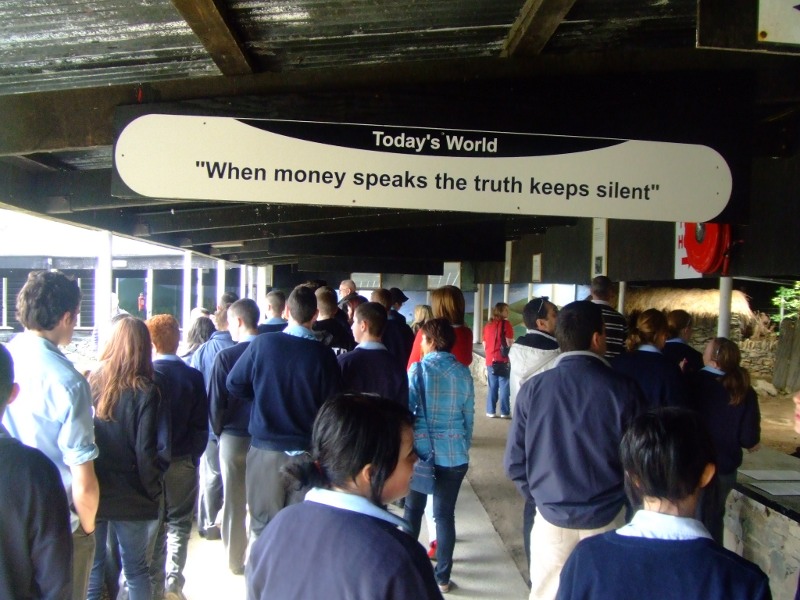
Back home, just a few words to say thank you to our Irish partners. We've enjoyed a lot our stay in that beautiful land. We've done a lot of activities, but I'd like to highlight the visit to the music classroom -really interesting for me- and the warm welcome of the teacher, Mrs. Cavanagh. At the end of the class, all the students made a superb performance of a 'a capella' three voice song. Here is an advance from our photo album. One of the pictures shows our school in a bird eye view. Is the large building in the centre. It was taken from the aeroplane, a few minutes before landing.



Friday, 30 April 2010
The Donagh Cross...

Here we are in front of Carndonagh's pride and joy, the Donagh Celtic Cross. It sits just outside
the school gate. Mr. Martínez informs me that it dates back to the 7th Century. (It's amazing what a visitor from overseas can tell you about your own back yard...) As I live 500 metres away from the cross, naturally enough I haven't a clue about it! Today we visited Mickey's Bookshop, where Peter gave us a warm welcome and sold us a rather nice artistic impression of the Donagh Cross. As you may have gathered, we're a little bit Celtic over here!

the school gate. Mr. Martínez informs me that it dates back to the 7th Century. (It's amazing what a visitor from overseas can tell you about your own back yard...) As I live 500 metres away from the cross, naturally enough I haven't a clue about it! Today we visited Mickey's Bookshop, where Peter gave us a warm welcome and sold us a rather nice artistic impression of the Donagh Cross. As you may have gathered, we're a little bit Celtic over here!
Thursday, 29 April 2010
Beautiful Ireland
 Here we are, four spanish -two teachers and two students- in the beautiful Ireland. it's being a great experience: we came here to work on our common multilingual project, but we are having much more than this. We are learning about Irish culture, education and, of course, music. I feel that music is everywhere around here, not only traditional or celtic, but also rock, classical, jazz,...
As I said in a previous post, music has much to do with writing, and also is a universal language, as everybody knows.
Comenius-E-Read meeting in Ireland.

No, it's not the European Parliament in session; for one thing, we've more to talk about!...On Thursday, 29th April, the Spanish, German and Irish teaching staff involved in the Comenius-E-Read project came together in Carndonagh Community School. The topics of discussion were: programme evaluation to date; reminders of project commitments; agreement on future objectives and the finished article, that being the publication of our book next year.
With everyone now brought up to speed, it'll soon be time to publish the end of year booklet, a review of blog submissions to date. Look out for that...
And don't forget to tune-in to Irish Community Radio (live link below) on Friday morning, 9:00 or thereabouts (Irish time). Pupils and staff will be discussing the finer points of Comenius-E-Read, and also their time in Ireland.
http://streaming9.planetwideradio.com/icrfm
With everyone now brought up to speed, it'll soon be time to publish the end of year booklet, a review of blog submissions to date. Look out for that...
And don't forget to tune-in to Irish Community Radio (live link below) on Friday morning, 9:00 or thereabouts (Irish time). Pupils and staff will be discussing the finer points of Comenius-E-Read, and also their time in Ireland.
http://streaming9.planetwideradio.com/icrfm
Monday, 26 April 2010
Céad míle fáilte!...Welcome to Ireland!...Bienvenidos!
 Spanish pupils Irene and Rocio were introduced to their Irish classmates in Carndonagh CS on Monday morning. They've settled in nicely, and even managed to find Room 149 - "the hidden room" - which is pretty impressive...it happened to be Spanish class at the time so I guess they just knew! Sr. Martínez and Sr. Santos have also been welcomed to the school, although our welcome probably left a lot to be desired as we forgot to make tea...Lo siento! However, we will endeavour over the next few days to make their stay a memorable one.
Saturday, 24 April 2010
2010 Cervantes Prize.
King Juan Carlos presents José Emilio Pacheco with the Cervantes prize
 José Emilio Pacheco - EFE
 The Mexican poet's trousers fell down just before the ceremony
Speaking on Friday after being presented by King Juan Carlos with this year’s Cervantes Prize, the Mexican poet and writer, José Emilio Pacheco, said he would have liked the prize to have been for Miguel de Cervantes, saying that that in Spanish literature, nobody had a life fuller of humiliations and failures than Cervantes himself. The prize would have brought relief to his final years.
Pacheco described his acceptance speech as ‘very simple and very modest’.
King Juan Carlos also used the occasion to express Spain’s thanks to Mexico, which he described as a ‘great sister nation which had never stopped contributing to Latin American and Spanish culture. The King said he was speaking for himself and the Queen when he thanked Pacheco for his works and for his life dedicated to literature, ‘for having revealed the poetic intensity of Spanish in a singular way’.
It proved an eventful day for Pacheco. Just before the start of the ceremony at the Alcalá de Henares University, his trousers fell down.
‘Not having braces is a very good argument against vanity’, he said afterwards.
Read more: http://www.typicallyspanish.com/news/publish/article_25867.shtml#ixzz0lzlTfdbA
José Emilio Pacheco - EFE
Speaking on Friday after being presented by King Juan Carlos with this year’s Cervantes Prize, the Mexican poet and writer, José Emilio Pacheco, said he would have liked the prize to have been for Miguel de Cervantes, saying that that in Spanish literature, nobody had a life fuller of humiliations and failures than Cervantes himself. The prize would have brought relief to his final years.
Pacheco described his acceptance speech as ‘very simple and very modest’.
King Juan Carlos also used the occasion to express Spain’s thanks to Mexico, which he described as a ‘great sister nation which had never stopped contributing to Latin American and Spanish culture. The King said he was speaking for himself and the Queen when he thanked Pacheco for his works and for his life dedicated to literature, ‘for having revealed the poetic intensity of Spanish in a singular way’.
It proved an eventful day for Pacheco. Just before the start of the ceremony at the Alcalá de Henares University, his trousers fell down.
‘Not having braces is a very good argument against vanity’, he said afterwards.
Read more: http://www.typicallyspanish.com/news/publish/article_25867.shtml#ixzz0lzlTfdbA
Friday, 23 April 2010
My favourite book (and some objective reflections!)
Nathaniel's Nutmeg: How One Man's Courage Changed the Course of History – Giles Milton
(...also, how one man's favourite book is another man's waste of time!)
 I’ve already misled you…Let me state my position! I had originally intended to write a short, highly complimentary piece about my favourite book (title above). But immediately there’s a twist in the tale! I made the mistake of visiting Amazon.com. Well, it’s hardly a mistake really, I highly recommend visiting Amazon.com...but on this occasion it was quite the mistake! I had visited said website merely to top-up my appreciation of the book and its author when, drop-jawed, I discovered five, yes FIVE one and two star reviews of this little masterpiece (by my reckoning!). That paint’s just not going to dry with me…I had to take a closer look.
Reading is big business...BIG business! But what makes a bestseller? What is the definitive factor that encourages people to part with their cash on Amazon.com for that one book that EVERYBODY wants? Is it the author, subject, quality of writing, shrewd marketing...or is it all of these things combined to various degrees? Can the front cover of a book seal the deal, or does the back cover blurb hold the key? Or it might just be the inevitable TV series following the publication that whets the appetite!
It does strike me as odd that any book could be considered universally outstanding. But while reading reviews of my favourite book, I actually felt annoyed that some people saw fit to criticise it to the point of insult. The reviews range from high praise (which is where I stand) to ridicule. It got me thinking - can I as a school librarian really speak with authority when suggesting books that pupils should read? Can I confidently buy books for the school library, particularly when limited by a tight budget, safe in the knowledge that I have the reading bases covered? It’s a skilful business judging group reading tastes, one which I’ve never truly felt comfortable with. Sad for a librarian to say of course. But, on reflection, I guess that’s the beauty of literature. Every book has a face, a scent, a character of its own. Some we like, some we don’t. But each has its place. Some people consider books as friends to be visited and revisited, enjoying the quiet comfort of their company. Others have a more formal association with their reading…studying, researching, analysing. In any case, for any taste, there’s a book! In the end, I can only conclude that while you will not always love the books you read, you will always read the books you love!
Nathaniel's Nutmeg is an exceptional read! Clearly though, I can’t speak for everyone…
(...also, how one man's favourite book is another man's waste of time!)
 I’ve already misled you…Let me state my position! I had originally intended to write a short, highly complimentary piece about my favourite book (title above). But immediately there’s a twist in the tale! I made the mistake of visiting Amazon.com. Well, it’s hardly a mistake really, I highly recommend visiting Amazon.com...but on this occasion it was quite the mistake! I had visited said website merely to top-up my appreciation of the book and its author when, drop-jawed, I discovered five, yes FIVE one and two star reviews of this little masterpiece (by my reckoning!). That paint’s just not going to dry with me…I had to take a closer look.
Reading is big business...BIG business! But what makes a bestseller? What is the definitive factor that encourages people to part with their cash on Amazon.com for that one book that EVERYBODY wants? Is it the author, subject, quality of writing, shrewd marketing...or is it all of these things combined to various degrees? Can the front cover of a book seal the deal, or does the back cover blurb hold the key? Or it might just be the inevitable TV series following the publication that whets the appetite!
It does strike me as odd that any book could be considered universally outstanding. But while reading reviews of my favourite book, I actually felt annoyed that some people saw fit to criticise it to the point of insult. The reviews range from high praise (which is where I stand) to ridicule. It got me thinking - can I as a school librarian really speak with authority when suggesting books that pupils should read? Can I confidently buy books for the school library, particularly when limited by a tight budget, safe in the knowledge that I have the reading bases covered? It’s a skilful business judging group reading tastes, one which I’ve never truly felt comfortable with. Sad for a librarian to say of course. But, on reflection, I guess that’s the beauty of literature. Every book has a face, a scent, a character of its own. Some we like, some we don’t. But each has its place. Some people consider books as friends to be visited and revisited, enjoying the quiet comfort of their company. Others have a more formal association with their reading…studying, researching, analysing. In any case, for any taste, there’s a book! In the end, I can only conclude that while you will not always love the books you read, you will always read the books you love!
Nathaniel's Nutmeg is an exceptional read! Clearly though, I can’t speak for everyone…
Thursday, 22 April 2010

Hallowe'en Party by Agatha Christie
Hallowe'en - the day of witches and ghosts. Some young people want to make a party, but during these preparations a girl named Joyce tells the others that she had once seen a murder. The others don't believe her at first, but at the end of the party Joyce is found in the library. Dead. With help of Mrs. Oliver, Mr. Hercule Poirot has to find the murderer and real evil of this night. In the same village some time ago, there died a Lady named Mrs. Levin-Smith. Is there any relation to the murder Joyce maybe had seen?
In this criminal case a broken well, a mysterious garden and a crazy kid are also playing a role.
Hercule Poirot is a belgian detective, invented by the author Agatha Christie (1890-1976). In many thrillers he finds murderers with his excellent brain.
This thriller isn`t bloody. Readers have a chance to find the murderer on their own because they don't know who was the one.

posted by M.D.


The Scarpetta Factor by Patricia Cornwell
This book is actually from a series about the Chief Madical Examiner Kay Scarpetta.
In this particular book Scarpetta is offering her services pro bono to the New York City's of the Chief Medical Examiner. She becomes involved in the case of a famous actor who is accused of an unthinkable crime and the disappearance of a beautiful millionaire with whom her niece shared a secret past.
On top of that, Scarpetta's CNN producer wants her to launch a new TV show called "The Scarpetta Factor".
Her growing fame and increased visibility result in a strange package - possibly a bomb - being delivered to her apartment building.
This book is not for weak nerves and probably not for children under 16. But if you're old enough, it will have you captivated until the very end.
posted by Alexandra
Wednesday, 21 April 2010
 “If you can read this, thank a teacher.”
Last year, our Vice-Principal and one-time English teacher took it upon herself to spearhead a literacy drive in Carndonagh CS.
From her experience in the classroom she is very much aware that the skills of reading and writing are unavoidably linked. To be a capable and contented reader, a pupil must also be a capable and contented writer. Literary ability is not confined to either skill in particular, but to both merged.
With that in mind, a poster was designed for the school library (see above). Literacy skills do not come easily to a lot of young people and we felt it was necessary to introduce a little incentive to the equation…Money...Of course, that got their attention! We wanted to enforce the concept that reading and writing are not "what nerds do in their bedrooms because they’re no good at football"...reading and writing are life skills and are certainly worth the effort!
While we’d like it to be the case that pupils would read and write with enthusiasm all the time, that’s just not going to happen. Literacy skills must be nurtured, enforced if necessary, until they become second nature. That’s our responsibility as teachers and librarians. Once the groundwork has been done, pupils who would ordinarily struggled with the concept of literacy as a pastime might then be encouraged to embrace reading and writing as pursuits to be enjoyed.
We highlighted the achievements of Booker Prizewinner, John Banville, author of "The Sea". We wanted to convince our pupils that they don't have to be born gifted, or with a book in their hand to be successful in the world of literature. John Banville is an ordinary man from an ordinary background who developed a love for literature, and continues that development every day. It's paid off big time!
So, keep reading, keep writing…it could be you!
Tuesday, 20 April 2010
April 23rd-Book Day-Cervantes & Shakespeare


Shakespeare & Cervantes
Life & Biography / Vida y BiografíaAlso known as…..
También conocido como….
Where was Shakespeare born?
¿ Dónde nació?
How many children did he have?
¿Dónde vivió?
Time when he lived?
¿Época en la que vivió?
Who did he marry?
Un hecho llamativo de su vida.
A strange profession he had?
Un trabajo extraño que desempeñó…
Works / Obras
How many sonnets did he write?
¿Qué son los entremeses?
How many plays did he write?
¿Qué géneros literarios escribió Cervantes?
Translate these well-known plays:
Sueño de una noche de verano
Mucho ruido y pocas nueces
El mercader de Venecia
¿Quién no pertenece al Siglo de Oro español?
Reinados:
Felipe II, Carlos V, Felipe IV, Fernando VII,
Literatura:
Góngora, Berceo, Quevedo, Calderón,
Pintores:
El Greco, Zurbarán, Goya, Velázquez
Match the titles with the themes:
Romeo & Juliet, Hamlet, Othello, Macbeth
Ambition – Doubt – Jealousy – Love
Empareja los personajes con la idea que representan
D. Quijote
Dulcinea
Sancho Panza
La libertad, el ideal perfección, el materialismo
Language & technique / Lengua y simbolismo
How many words did he use in his Works?
¿Qué aspectos sociales ensalza y cuáles critica?
How many words is he said to have created?
Cita un paralelismo entre Cervantes y su personaje del Quijote:
Definitions of language resources:
Long speech by one actor alone on the stage
Direct address to the audience
Words with more than one meaning
Unrhymed five-metre verse
Algunos vínculos para más información. Recursos:
http://www.worldbookday.com/ http://www.todayinliterature.com/stories.asp?Event_Date=4/23/1616 http://www-tech.mit.edu/Shakespeare/works.html http://www.cv81pl.freeserve.co.uk/life.htm http://www.online-literature.com/cervantes/don_quixote/
“El corazón tiene rezones que la razón no entiende”
“ Ser o no ser, esa es la cuestión”
Subscribe to:
Posts (Atom)