Monday, 28 February 2011

RODDY DOYLE WRITES


Just before Christmas I was sent a list of twenty-five books, all of which had been chosen for World Book Night (March 5th), when a million copies of the chosen books will be given away, free. I hadn’t read most of the twenty-five, so I decided I’d try to read all of them before the March 5th. I’ve read sixteen, so far, and these are my favourites:

1. AGENT ZIGZAG, by Ben McIntyre
This is the true story of a World War Two double agent; he
spied for both sides. It’s very exciting, often funny. If it was a novel you wouldn’t believe it, because some of what happens is so mad and far-fetched. But it actually didhappen. It starts with a woman talking to her future husband, the double agent, in a hotel restaurant. Two men walk in – the police. He gets up, and jumps straight through the glass of the hotel window. And that’s the last she sees of him for six years!

2. ALL QUIET ON THE WESTERN FRONT, by Erich Maria Remarque
Another war book, World War One this time. It’s about a very young man’s life in the German Army – how he survives, the insanity of war, the endurance of friendship. It’s very simply written, in the present tense, almost as if he’s writing it while the bombardments and firing are taking place.

3. STUART, A Life Backwards, by Alexander Masters
This is the true story of a homeless man, told to the writer, Alexander Masters, who met Stuart on a street in Oxford. Stuart thought the first draft was boring, so he told Masters to tell the story backwards – from the time they first met, through – backwards – his times in jail, his troubles in school, his teen years, his childhood. He thought it would be a much better way of telling the story – and he was right. It’s shocking, funny, sad, terrifying an absolutely brilliant.

WORLD BOOK NIGHT. The Largest Book Give-Away Ever Attempted!


20,000 passionate book lovers will give away 1,000,000 books on the inaugural World Book Night
The countdown begins. World Book Night will take place on Saturday 5 March 2011 and will be broadcast in partnership with BBC Two. This dynamic and unprecedented industry-wide initiative to celebrate adult books and reading will see one million free books given away on World Book Night by 20,000 passionate readers to other members of the public across the UK and Ireland. World Book Night will take place two days after World Book Day, the established nationwide reading campaign.
A growing list of high-profile figures from publishing, media and the arts are lending their support to this ambitious initiative by becoming Patrons of World Book Night including Damon Albarn, Dave Eggers, Colin Firth, David Gilmour, Antony Gormley, Seamus Heaney, Damien Hirst, Nigella Lawson, Mary Portas, J.K. Rowling and Tilda Swinton.
Author John le Carré says:

“No writer can ask more than this: that his book should be handed in thousands to people who might otherwise never get to read it, and who will in turn hand it to thousands more. That his book should also pass from one generation to another as a story to challenge and excite each reader in his time -that is beyond his most ambitious dreams.”

Author Margaret Atwood adds:

“When Jamie Byng told me about World Book Night, I was amazed not only by its magnitude but by its simplicity. The love of writing, the love of reading – these are huge gifts. To be able give someone else a book you treasure widens the gift circle. I was thrilled to be asked to support World Book Night, and doubly thrilled that The Blind Assassin was chosen to help launch it. Long may its voyage be!”

Wednesday, 23 February 2011

Reading?...Not sure about that! (by Ruairi Hession, Transition Year, Carndonagh CS)

I don’t really read books...but I'll read if I'm forced! To me, reading means taking time out and sitting down with a book. I have realised though that I do actually read a lot throughout the day. I may not read books, but I will read computer game magazines, for example, or the text used in games. I also watch some movies with subtitles.

Another form of reading that is unavoidable is studying. I’m in Transition Year now, so I don’t do a lot of studying at the minute. But when I was in Third Year with Junior Cert exams coming up, I was studying like crazy, obviously involving a lot of reading. For the English Junior Cert exam I had to read a novel and a William Shakespeare play.

Reading is a great thing and I wish I would read more, but with all the distractions I never find the time...with TV, computers and gaming consoles, it's much too hard to stay focused. I may read more as I get older and need to increases my vocabulary.

That’s all I have to say. Hope it wasn’t to much trouble to read!

Ruairi Hession
Transition Year, Carndonagh CS

Friday, 11 February 2011

more pictures about reading


Pictures made by Philipp Kröncke and Tamara Röser (class 7a).

pictures about reading


These pictures were made by Magdalena Straub (class 7b), Achim Mack (class 5a), Janina Mayer and Tatjana Böss (class 5a), Carolin Drempetic (class 5a) and Nicole Reinelt (class 7a).

bookworms


Pictures made by Laura Mayer and Amelie Wengert (class 7b)

collection of "reading rats"


"Reading rat" is the German expression for a passionate reader. These pictures were made by Elias Abele, (Class 7b), Hanna Keller (class 7a), Stefanie Brenner (class 7a), Carina Rill (class 5a) and Alexa Haan (class 7a),

Wednesday, 9 February 2011

Literature Week in Santander.


La Semana de las Letras, que inicia la programación mensual de la Fundación Santander Creativa, ofrecerá del 19 al 26 de febrero un total de 32 actividades relacionadas con la literatura que se desarrollarán en una veintena de espacios de la ciudad, desde bibliotecas a centros cívicos pasando por mercados.

La Semana de las Letras ofrecerá 32 actividades literarias en 20 espacios de la ciudad

Con esta actuación, que incluye 14 propuestas dirigidas a todos los públicos, se pretende dinamizar el tejido social y cultural del municipio y sacar la cultura a la calle.

Así lo han anunciado este miércoles en rueda de prensa el alcalde de Santander, Íñigo de la Serna, y el concejal de Cultura, César Torrellas, quienes han hecho un llamamiento a la participación popular en la primera de las semanas dedicadas a una disciplina cultural, al tiempo que han destacado el uso de las redes sociales —Twitter y Facebook— tanto como soportes creativos como para la difusión de la actividad con el objetivo de llegar a más público.

El propósito de la semana es ofrecer a los vecinos la posibilidad de encontrarse con la cultura en la calle "sin necesidad de ir a buscarla a un espacio" y "expandir la cultura por todos los barrios", ha indicado el alcalde.

Además, se dirige a todo tipo de público: para los niños habrá cuentacuentos y actividades de fomento de la lectura; los jóvenes podrán disfrutar de charlas con escritores cántabros en un acercamiento a los IES; y para los adultos se han programado recitales poéticos, cuentacuentos, talleres de escritura, etcétera. PROGRAMACIÓN

La programación incluye la actividad 'Alumnos y poetas', del 21 al 25 de febrero, en la que cinco poetas cántabros —entre ellos Carlos Alcorta, Lorenzo Oliván y Javier Fernández Rubio— visitarán varios institutos de la ciudad para mantener encuentros con los alumnos. El objetivo es acercar la poesía a los jóvenes y estimular la creación entre los alumnos.

En 'Vecinos y poetas', los centros cívicos de la calle Alta y Cueto acogerán los días 21 y 22 recitales de carácter didáctico, que incluyen lecturas dramatizadas y proyecciones para acercar la poesía a públicos no familiarizados con ella.

'Comparte un poema' es una breve antología poética audiovisual que se distribuirá a través de las redes sociales, y en la que diez poetas cántabros han grabado vídeos recitando dos de sus poemas. El objetivo es invitar a amigos a colocarlos en sus muros y repartirlos por la red.

El día 19, como inauguración de la semana, tendrá lugar la actividad 'Poemas en el mercado', en la que la poetisa Raquel Martín realizará en el Mercado de la Esperanza una intervención escénica con versos de poetas cántabros de ayer y hoy.

Además se organizarán los 'Itinerarios poéticos', que permitirán conocer rincones que han inspirado a creadores o visitados por éstos, como por ejemplo la cafetería donde desayunaba José Hierro, por dónde paseaba o el bar donde tomaba el aperitivo. Esta actividad, que tendrá lugar el 26 de febrero, necesita inscripción en la Fundación Santander Creativa.

Uno de los actos destacados de la programación, según ha indicado Torrellas, es el recital que ofrecerá el día 25 en el Museo de Bellas Artes el poeta Manuel Vilas, que incluirá poemas de su último libro, 'Amor'.

A partir del 21 de febrero y durante ocho semanas, la Biblioteca Municipal acogerá el taller de escritura 'Las personas creativas ven ventanas donde otros sólo ven paredes', que permitirá a los participantes mejorar su creatividad, descubrir técnicas de trabajo y conocer a poetas y narradores cántabros. Esta propuesta, que tendrá continuidad todo el año, necesita de inscripción previa.

'Somos puro cuento' ofrece un viaje de carácter didáctico por los cuentos para adultos de la historia de la literatura y tendrá lugar el día 26 en el Espacio Joven.

Mientras, en 'Mordiendo la manzana' Arte en Escena ofrecerá un sorprendente recital de música, poemas y textos. Será los días 19 en el Museo de Bellas Artes, y 23 y 24 en la Carpa de las Letras que se instalará en la plaza del Ayuntamiento.

También se organizarán dos bookcrossing —liberación de libros— en el Mercado de la Esperanza el día 19, con motivo del inicio de la Semana de las Letras, y en la zona de Nueva Montaña el día 23, que se complementarán con charlas sobre este movimiento.

Las actividades incluyen, igualmente, un concurso de micropoesía y microcuento en Twitter. Los interesados podrán enviar microcuentos y micropoesías de no más de 140 caracteres a través de Twitter. Los premios serán de 250, 150 y 100 euros en cada categoría a las propuestas más creativas.

Actividades para niños

Por su parte, niños de tres a seis años podrán participar en el taller infantil 'El lobo ha vuelto. Una manera nueva y diferente de fomentar la lectura'. Con la ayuda de educadores, los pequeños analizarán e interpretarán varios cuentos relacionados con la figura del lobo y cómo ha cambiado su percepción desde el lobo clásico al moderno. La actividad necesita inscripción en el Centro Cívico Callealtero o en la Carpa de las Letras, donde se celebrará los días 19 y 26, respectivamente.

Además, se ofrece el taller 'Hay algo por ahí que es un libro', de elaboración de libros de artista con material recuperado. Precisa inscripción en Mundanalruido (calle San Celedonio), donde se impartirá del 23 al 25 de febrero.

Finalmente, Alberto Sebastián ofrecerá un programa de cuentacuentos, 'Cuentos viajeros', que tendrán lugar en diferentes espacios de la ciudad del 19 al 26 de febrero.

Thursday, 3 February 2011

I think I might like reading! - Bridgeen McLaughlin, Transition Year, Carndonagh Community School

I think I am a typical Irish student...a lot of students don't read in their spare time. I wouldn’t think of reading, even when there is nothing else to do. Overall, I don’t really like reading!...BUT...I have to go to the library once a week with my class and have to read a book for the teacher. I've discovered that I do actually enjoy it when I read a certain book. Our last book was called "Night World" which is about Vampires, but I didn’t start it until the night before it was due back in the library. When I did eventually read the book (some of it...), I really enjoyed it. I was glued to the pages and couldn’t stop reading the next day...I wish I had read the whole book before returning it, but we had to choose a different one.

I think if I was to accept that I do probably like reading, I would do it more often! I'm sure I would enjoy books, I just don't think I'm at the stage of definitely liking to read yet!

Love reading...in any language! - Carmen Bendito Olmos - Transition Year, Carndonagh Community School

Mi nombre es Carmen Bendito Olmos y soy de Melilla pero estoy viviendo en Irlanda por un curso escolar con una familia de acogida con el único proposito de aprender inglés, el cual por el momento se esta cumpliendo.
La vida esta llena de baches, aveces es difícil seguir adelante, mirar al frente y plantarle cara, en esos momentos lo mejor que puedes hacer es, leer, sí leer, porque un libro te puede ayudar, te puede despejar la mente, te puede hacer llorar de alegría o felicidad , te puede hacer sentir miedo, te puede hacer reír, puedes aprender de ellos, puedes odiarlo, puedes quererlo, y lo mejor de los libros es que, aunque tengan un numero limitado de páginas, puedes leerlos todas las veces que quieras. Yo al principio de esta etapa de mi vida llamada irlanda me sentía sola, trisite, melancólica, echaba de menos a todo el mundo y para colmo en el sitio en el que estaba no me entendían, mi único consuelo era cuando todos se iban a la cama y yo me quedaba leyendo uno de mis libros favoritos; Harry Potter y las Reliquias de la Muerte, tuve que pagar exceso de equipaje porque llevaba demasiados libros! Marina, La sombra del viento, el Hobbit, Harry Potter, la Isla del Tesoro, Hoyos, el Viento en los Sauces, Dr.Jekyll y Mr Hyde…etc cada noche leía hasta que me quedaba dormida. Poco a poco fui sintiéndome mejor hasta que a día de hoy, tengo un gran nivel de inglés.
No me acuerdo en cual libro fue, que leí que el hogar va donde tu vas, y reflexionando aquella frase me di cuenta de que soñar despierta que volvía a casa, no me hizo ver que, ya estaba en casa! Y entonces caí y dije esto solo me pasará una vez en la vida y ahí fue cuando empeze a aprender y a vivir el inglés, y todo gracias a un libro a una frase, que al fín y al cabo son sólo palabras pero que al juntarlas tienen un significado.
Los libros son un buen sistema para matar el aburrimiento, para debatir con tus amigos, para vivir aventuras sin moverte del sofá, son una herramienta de aprendizaje. Ahora que se inglés, prefiero leer los libros en versión original pues cuando estan traducidos siempre suelen ser diferentes y hay cosas cambiadas por ejemplo en Harry Potter lo chistes de los gemelos Weasley son mucho mas buenos en inglés.
Mi libro faborito, sin contar los de Harry Potter, es sin duda Marina, es un libro que parece que en vez de estar escrito con el cerebro, esta escrito con el alma y te toca el corazón, con ese libro, pase miedo, llore, hubo un momento en que no podía parar de leerlo, aprendí, y es el primer libro que recomiendo siempre, la forma de escribir de Carlos Ruiz Zafón es increíble, es mi escritor faborito y os lo recomiendo.
Leer es para mi, un vicio y he de decir que es el mejor vicio porque lo único malo que te puede pasar es, que acabes como el Quijote.

Wednesday, 2 February 2011

Interview mit der Lesepatin Frau Gärtner

Interview mit Frau Gärtner, der Lesepatin der Stadtbibliothek Nördlingen

Frau Gärtner, was ist eigentlich ein Lesepate?

Ein Lesepate ist ein Mensch, der gerne anderen Menschen vorliest, meist regelmäßig an einem bestimmten Ort und für eine bestimmte Gruppe. Lesepaten arbeiten ehrenamtlich.

Wie wird man Lesepate?

Man kann sich melden, dass man dieses Amt übernehmen möchte, zum Beispiel bei der Stiftung Lesen oder beim Familienportal des Landkreises. Ich kam allerdings anders dazu: Eine Bekannte fragte mich, ob ich am Weltvorlesetag in der Stadtbibliothek Nördlingen vorlesen könne. Ich sagte zu und nach der ersten Geschichte, die ich vorgelesen hatte, kam die Leiterin der Bibliothek, Frau Häffner, zu mir und fragte, ob ich das nicht öfter machen könne. Und seitdem mache ich das.

Wie sieht Ihre Arbeit als Lesepate aus?

Ich lese einmal pro Monat in der Stadtbücherei Nördlingen vor für Kinder ab fünf Jahren. Die größte Arbeit macht das Heraussuchen der Bücher: Ich gucke bei den Leseempfehlungen der Stiftung Lesen, im Internet oder in der Kinderabteilung der Bücherei. Dann nehme ich einen großen Stapel Bücher mit nach Hause und lese alle durch. Nur wenn mir die Sprache eines Buches gut gefällt, kann ich es auch vorlesen.

Wenn es sich anbietet, nehme ich mein Cello mit und spiele ein paar Zaubermelodien, so wie bei „Josa und die Zauberfidel“ von Janosch. Oft möchten die Kinder auch ins Buch gucken, um die Bilder anzuschauen. Bei großen Gruppen wird das schwierig, da habe ich auch schon die Bilder aus dem Buch in groß abgemalt. Das ist natürlich ziemlich aufwändig. Für Astrid Lindgrens „Tomte Tummetott und der Fuchs“ habe ich die Bilder eingescannt und an die Wand projiziert. Das war nötig, denn in dem Buch ist der Text ziemlich kurz und beschreibt wenig, sodass die Bilder zur Unterstützung gebraucht werden.

Schwierig ist, dass man vorher nie genau weiß, welche Kinder kommen werden. Es gibt ja eine relativ große Altersspanne, wenn es heißt „für Kinder ab 5“. Manchmal kommen sogar Erwachsene und ich möchte möglichst alle ansprechen. Man muss auch aufpassen, weil manche Kinder das Gehörte sofort umsetzen: Als ich eine Geschichte aus „Oma und Frieder“ von Gudrun Mebs vorlas, in der Frieder wie ein Roboter durch die Wohnung läuft, fing ein kleiner Junge sofort an, das nachzumachen. Das bringt große Unruhe in die Vorleserunde. Es ist auch besser, die Kinder nicht auf Kissen sitzen zu lassen, da sie meist anfangen, damit Türme zu bauen. Man sollte auch nicht zu lange lesen, die Kinder sollen sich konzentrieren können. Aber generell hören die Kinder sehr gerne zu.

Warum wurden Sie Vorlesepatin?

Ich möchte Kinder vom Lesen begeistern. Ein Schriftsteller hat einmal gesagt: „Da fing mein Leben an: ich konnte lesen.“ Auch will ich mit guter Sprache ein Gegengewicht setzen zur flachen, verarmten Sprache. In den Familien wird ja häufig nicht mehr oder nur wenig vorgelesen. Natürlich macht es mir auch richtig Freude.

Vielen Dank für das Interview.

Mrs Gärtner reads books to children in the Public Library in Nördlingen once a month, because she wants to inspire children. It is an honorary post.


Interview with Mrs Gärtner, godmother of reading of the town library in Nördlingen

In her interview Mrs Gärtner explains what she understands of a godmother/-father of reading: they read aloud to other people in a certain time and place and do it as voluntary work. In order to become a godfather of reading you have to apply for it at a foundation. Once a month she reads for children books she chose from the library after she read all of them. But only those with the most beautiful language are read in front of the kids. Sometimes she even takes her cello with her and plays to make a wonderful time for them. When a story is described very shortly in the book she even has to copy the pictures in the book so that everybody can understand it properly. To satisfy the whole audience isn’t always easy, because she never knows how old they will be, sometimes there are adults and children of five years at the same time. The smaller ones often act out the scenes which disturbs the silence. It is very hard for them to concentrate for a long time so the story may not be too long. But generally kids like listening to stories.
For Mrs Gärtner the greatest pleasure is to fill the children with enthusiasm for reading. She wants to make a contrast to the daily life of most families where little or nothing is read to children at all. And she enjoys it.

Eliana Römer K2

Sunday, 23 January 2011

The Pillars of the Earth, written by Ken Follet


It is a book that I really liked, because it tells three stories that started independently but finished together and you can learn a lot about this society and how to life in this time. Each of them relates a kind of life in that time.

The story set in the Medieval Age, with a society divided in levels, in the unequal Great Britain, where there’s a big Civil War to become the successor of the king, who was assassinated. One of these stories narrates the story about a monk and the corruption, the lies and the illegal agreements in the clergy. Another one tells about a noble family, with their help to the king in the war (changing always to who seems it’s going to win), their control of the crowd and the familiar agreements. The last story tells how an artisan family’s life is, in which the father is an architect and his dream is to build a cathedral.

All the stories focus around to village (called by the author “Kingsbridge”) where there’s an abbey, to its cathedral and to a noble family which is the antagonist (they try to destroy Kingsbridge and became powerful join forces with a corrupted bishop. In the book the years pass by quickly, even generations.

I liked this book a lot, and I recommend it to every one. I know it’s very big, but when you start it, you’re trapped by it.


Laro del Río, 4º C

Wednesday, 19 January 2011

Odette Toulemonde


Odette Toulemonde par Eric-Emanuel Schmitt

Odette Toulemonde est une femme qui est un grand fan de l’écrivain Balthazar Balsan. Ella a lu tous ses livres. Un beau jour, c’est un grand jour pour elle parce que Balthazar Balsan est à Bruxelles pour signer son dernier livre pour ses fans. Alors Odette profite de la possibilité de se faire signer un de ses livres. Et c’est la raison pour laquelle elle est très excitée et à cause de ça, elle n’arrive pas à lui dire son prénom. Elle dit seulement « Dette ». En conséquence, Balthazar Balsan écrit « Dette » dans le livre d’Odette. Pour elle, c’est horrible et elle très déçue d’elle même. A la maison, elle écrit une lettre pour Balthazar. Dans le même temps, Balthazar a une affaire sexuelle avec Florence, son attaché de presse en Belgique, et après Balthazar voit une critique détruisante d’Olaf Pims à la télé. A cause de cette critique, Balthasar devient dépressif. Lorsqu’il voit que sa femme a une affaire avec Olaf Pims, il veut mourir et il essaie de se suicider. Après les séjours à l’hôpital, il lit par hasard la lettre d’Odette. A cause de la lettre et parce qu’il ne veut pas rentrer à la maison à cause de sa femme, il va chez Odette. Il lui demande s’il peut vivre quelques jours chez elle. N’étant pas réticente, elle dit oui. Il essaie de coucher avec elle, mais Odette ne veut pas coucher avec lui, parce qu’elle aime encore son mari Antoine qui est mort. En conséquence, Balthazar ne veut pas rester plus longtemps et quitte l’appartement. Mais il donne un peu d’argent à Rudy, le fils d’Odette, afin de conduire à la mer avec sa mère et sa sœur, ce qui était son rêve depuis longtemps. Alors la famille Toulemonde conduit à la mer et Balthazar cueillit son fils de son voyage dans les Alpes. A la mer ils ont rendez-vous à la plage. Odette est très heureuse parce que Balthazar est là. Le soir, ils dansent ensemble dans l’appartement de vacances. Le jour suivant, la femme de Balthazar et son éditeur arrivent aussi dans l’appartement de vacances. Isabelle, la femme de Balthazar et lui parlent ensemble pour oublier ses problèmes. Le soir, Balthazar veut rentrer à la maison avec son famille et l’éditeur. Odette est très blessé parce qu’il veut la quitter. Et pour ça elle a une crise cardiaque. Alors elle doit aller à l’hôpital. D’abord, seulement son fils Rudy et sa fille Sue Helen sont dans la chambre d’hôpital. Mais Balthazar aussi attend devant la chambre d’Odette. Quand Odette éprouve qu’il soit devant la chambre elle veut qu’il entre. Balthazar Balsan dit à Odette qu’il a parlé avec Antoine et il a dit que c’est d’accord qu’Odette a une nouvelle relation avec un autre homme. Et alors Balthazar Balsan et Odette ont une belle vie ensemble.


Carina Weidner et Julia Kaschek, K1


Odette Toulemonde
Vergleich Film und Buch

Der Film Odette Toulemonde ist vor dem Buch entstanden. Der Autor Eric Emanuel Schmitt hat in seinem Buch einige Dinge weggelassen, die er im Film jedoch verarbeitet hat. Da wir im Unterricht zuerst das Buch gelesen hatten, hatten wir uns die Figuren anders vorgestellt, als sie im Film dargestellt wurden. Doch nicht nur die Darstellung der einzelnen Personen, auch die Musik und das Umfeld hätten wir uns, durch das Vorwissen des Buches, anders gedacht. Außerdem wurde im Film eine weitere Person namens Jésus eingeführt, die im Buch nicht vorkommt. Es war seltsam, dass dieser Jésus auch die Person des wahren Jesus Christus verkörpert und sein Lebensweg darstellt. Durch diese Einschübe wurde die Handlung um Odette Toulemonde und Balthasar Balsan häufig unterbrochen. Ebenso hat der Autor den Schluss im Film komplett anders gestaltet als im Buch.
Carina Weidner, 17 ans, Julia Kaschek, 18 ans

Tuesday, 18 January 2011

The joy of reading


Reading broadens your knowledge by opening up the whole world to you. It can powerfully strengthen your imagination and your own ability to communicate.
I love reading. I have been reading since I can remember. I can´t live without a good book before going bed. While I´m reading, I´m visiting another country, a different period of time, or travelling across space.
Books have always been an inspiration for me. When I have a good book, I´m feeling like having a good friend. I´ve learned about different professions, grammar, geography and history from reading. I developed, also, my vocabulary.
Sometimes I re-read my favorite books. Reading them twice gives me chance to pay attention to different sections and experience them differently.
Even after a long day of reading difficult stuff for school, I can pick a good book and read it for fun and relaxation.
Sadly, nowadays, reading has plunged down. Dramatically. Books are not as popular as they were in the past. Most of people find reading a book boring or maybe even a work. They prefer getting entertainment from computer, TV, iPods…etc… I´m not trying to say that those things are bad, because they are useful and nowadays we can´t live without them. But a book is always a good break, and it can slowly become a good inspiration, or even a good friend. I think that reading takes us away from bad things that happen in our lives, and the joys of reading have to be experienced.
Doina Bectaras, 4 ´C´

Sunday, 16 January 2011

Carlos Ruíz Zafón by Oscar Sierra


Biography

Carlos Ruiz Zafon (Barcelona, 1964) is one of the European writers with more projection in the World. He started in 1993 with El Principe de la Niebla and after he publiced three novels more, for the young people: “El Palacio de la Medianoche”, “Las Luces de Septiembre” and “Marina”. In 2001 he publiced books for adults, “La Sombra del Viento”,etc.”La Sombra del Viento”, it has been in the best exit of the Spanish novels. His books was traduced at 40 lenguages and publiced in more of 50 countries. He won a lot of International prizes and he conquisted a loto f people, young and adults.


My favourite book of Carlos Ruiz Zafon is “El Palacio de la Medianoche”. This book is an interesting book , because is an extrange and amusing book, this book is more fascinate. I read “El Principe de la Niebla”, and this book is more fascinate and striking. I like Carlos Ruiz Zafon.


Saturday, 15 January 2011

The Shiva’s tears


The Shiva’s tears is one of my favorite books. I recommend it to all the people who like the romantic books. The book was written by César Mallorquí.

It is a book that presents a problem of love.
Javier, the protagonist of this story is going to spend the summer in Santander, the town where his uncles have a mansion called Villa Candelaria. His father is ill. Villa Candelaria is boring until he meets his cousins: Rosa, Margarita, Violeta y Azucena. One day his Javier asks Violeta what the tears of Shiva were and who Beatriz Obregon was. Her cousin told him, the tears of Shiva was a necklace that the Mendoza family gave to Beatriz.

She escaped from the marriage with the Mendoza family and they claimed the necklace, but the Obregon’s family didn’t know about it. Javier feel the presence of a ghost. He told Violeta, and she told him that she saw it too. She thought it was a ghost, a female harmless ghost. They began researching in the library of Beatirz. One day that they began to learn from clues from the ghost. They found many things about her. Until one day Javier came up with the idea of going to the storeroom to find the Beatriz furniture because he thought that the necklace could be there. They searched, searched and searched but they didn’t find anything. Until they found a letter signed by her. It was addressed to his dear Simon Cienfuegos, a black captain who had the Savanna, a ship that, long ago, departed to America.

In Beatriz surely went with him. The next day went to the house of Amalia, an old woman who told the news. But the old woman knew everything. Next day they returned home but did not say anything new. The search began again in the attic and the next day Javier got up early and again he went to the house of Amalia. Amalia seemed angry already. At the end Amalia got fed up and said, ‘take, take the necklace, Keep it and do not come here anymore’. Javier went away from home with a very old metal box and, without opening it. When he arrived at Villa Candelaria he showed the necklace to his cousins and quickly to their parents. They dressed up very quickly and they went to give it to the Mendoza family. The Mendoza and Obregon were at peace since then. Javier went to Madrid because his father had improved and Javier and Violeta fell in love.

Carmen Frechoso 4ºA IES. La Marina

Friday, 14 January 2011

Daniel Fernández Muñoz 4ºB

My favourite book is “The murder”. A boy lives in North American, in Florida. He always says Florida is a very beutiful and interesting country . In Florida he was pursued because manu peolple thought he was a criminal. The police looked around the country and the police finally found out who the criminal in the North the Florida was. The criminal spent forty years old in jail. He was twenty eight and finished when he was old.

“The murder” is a book very interesting, very emotional and very nice. In my opinion this book is very popular around the planet and very interesting for all the people.

<##>

Gerry Durrell talks about his life alter moving to Corfu. Here starts for him a new life very different than in the rainy England. He moves with his mother and his brothers, and all of them are very happy, specially his big brother Chris, who is the one who had the idea of moving, and persuaded the others. They were bought a new big house near the sea, and there are many fields to explore for Gerry, who is very fan of the zoology and a lover of the wildlife. He is going to become a great explorer. He is going to start a collection of animals which are going to have to coexist with his family.

I liked this book very much because is so funny and interesting. There are a lot of adventures in Gerry’s life that catch you.

Gerald "Gerry" Malcolm Durrell, OBE (January 7, 1925 – January 30, 1995) was a naturalist, zookeeper, conservationist, author, and television presenter. He founded what is now called the Durrell Wildlife Conservation Trust and the Jersey Zoo (now renamed Durrell Wildlife) on the Channel Island of Jersey in 1958, but is perhaps best remembered for writing a number of books based on his life as an animal collector and enthusiast. He was the brother of the novelist Lawrence Durrell.

By Jaime Lucaç 4º A

Reading, by Maria Fernández


READING:
I’m not really interested on the reading at the school. It’s very interesting, entertaining… But I prefer to read my own books. I like fantasy and action book I hate history and war books, they are very boring.
Normally, I choose the book, if I like the cover, though I always read the blurb because sometimes they are horrible and looks very boring.
When I like the summary, this means that it’s going to be an entertaining book. When I have free time, when I finish my homework, and before going to bed, I spend some time to read. I’m not a fanatic of reading, and it isn’t the best thing that I like doing but, sometimes it’s very relaxing, because it is the only time of the day, that you can be quiet, and with out any stressful thing around you, since you are open minded.
My favourite writer is Federico Moccia. He is an Italian writer. My favourite book is “ A tres metros sobre el cielo”. The book it’s about a boy and a girl that fall in love, but they come from very different worlds. The girl it’s a brilliant student, and the perfect daughter. On the other hand, the boy, Step, it’s an aggressive teenager, and he didn’t care about the studies, regardless, they fight for their love. She managed to make Step change, and they live a love story. I have already read all the book of that collection.
María Fernández García 4ºA

Harry Potter


I have read all the Harry Potter´s books, and the story is absolutely fantastic. There´re seven books. I think the numbers four, five, six and seven are better than the others, because the other books were more childish, but the latter story becames for adults.
The plot is not complicated: Harry, Ron and Hermione are wizards and they study in Howarts. The story starts when they arrive to the school for the first time. They live exciting and curious adventures while they´re becaming adults. Everybody at the school knows who Harry is. In the most of the books, Harry and his friends fight versus Lord Voldemort and his people. Voldemort is the antagonist of the story, he is an evil person. He killed Harry´s parents when he was a baby, and Voldemort wanted to kill Harry too, but strangely he survived and Voldemort remained weak for a long time. Only Harry can kill him.
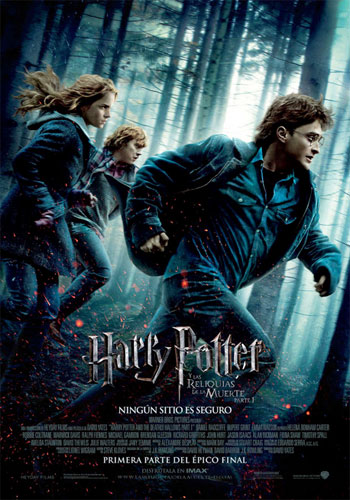
At the moment there´re six films about the story. Recently, the number seven part one was released in the spanish cinemas. I´m thrilled about it because I´m a crazy fan. The book number seven, ``Harry Potter and the Dealthy Hallows´´, is probably the best, and there are a lot of things about it. So, Disney has done two films for this book. I prefer two parts, because I love Harry Potter´s world, though the films don´t reflect the story very good.
Those books are the best that I have read, and I read a lot.
Thanks for J.K. Rowling for writing them.

"I'll never be your hero" by Carlos Beltrán

I read the book “I’ll never be your hero” two tears ago. The book is about a boy called Andres who has a lot of problems.
Her girlfriend Sara left him, he always argued with her parents, he failed five subjects in his school…
But he likes drawing. He is a good artist and he would like to dedicate it.
Later, he spoke with the new Sara’s boyfriend, Jaime to do a work of class. Jaime told him that he could study better if he used the art. Andres paid attention to him and he passed all of his exams.

I recommend this book for other teenagers because I think that someone can be in the same situation and this book can help them.

CARLOS BELTRÁN SAIZ 4ºA

I’ll never be your hero


One of my favourite books at the moment it’s called “Nunca seré tu héroe” (I will never be you hero) by María Menéndez Ponte, a presently famous writer.

The Reading turns out to me very amusing, because it tells the youngster life of a boy and he talk about his problems everyday, every daily situation, and I identify with the character. and happy with him.

Andrés, the main character of this story, is a fifteen-year old boy. He doesn’t study anything and he never does his homework. Then, his teachers are really angry with him.

His friends have unhealthy habits, they go out, drink a lot, and they smoke too. His girlfriend left him too. But later he realised that, if he studies and does his homework, he will pass his exams, and her parents will be more tolerant.

If he fights hard to get on in life, his friends will help him and he will be happier with himself.

The book shows you that if you want to change your life you will be a better person.

María Menéndez Ponte writes novels about teenagers’ problems and she has also other books like “El poso amargo del café”, “El dilema de Bea”.


FALSE MOVEMENT


The book `` false movement´´ tells the story of a family made of a father, a mother and a daughter.
One day the father leaves her to go out of holidays with the boyfriend. The story focuses on the daughter because it turns out that she does not find the boyfriend and they go to look for him. It turns out that the one that they were looking was not his boyfriend it was different with the same nickname. The father thinks that he is a bad person and does not really on the daughter. In the end, they return to the bar to which they have been with Chapi and find it, after an accident the father of the daughter dies.

In my opinion it is a good book and I recommend it because it is entertaining and until the end you do not guess what is going to happen.


Cristian Menéndez Garrido 4ºA IES LA MARINA

The girl on the other platform


The girl on the other platform, written by Jorge Gómez Soto, is a realistic novel, addressed towards young readers. It shows the major problems of teenagers: friendship, love, Saturday nights, and it is told in first person.


PLOT:

It tells the story about two twins, who are physically the same, but their behaviours are completely different and they only talk about important things. Miguel enjoys going out to parties with friends, getting drunk, meeting girls. He is an spontaneous and open boy. However he hates studying, writing, reading… Unlike his brother Edward, who is a responsible, student, a shy guy, who doesn’t go out on weekends with friends and because he is very bad at flirting with girls.


In the novel the two brothers will discover that they have in common much more than they believed. Two girls: Irene and Yolanda, who are smart, beautiful and fun, and they don’t know each other, come into the life of these so different twin brothers. Miguel will meet Yolanda in a drinking night. She is a young journalist. Miguel tries to impress her with tales that his brother writes. Miguel gets them rubbing the stories. Yolanda was angry with Miguel because she discovered the truth and he, who is in love with her, writes a story called: the girl on the other platform. Yolanda finally forgave him. Meanwhile, Edward knew a girl called Irene on the Internet and he finally decided to meet her for a walk through the streets of Madrid. Edward, who didn’t know the streets of Madrid, pretended to be his brother to impress the girl.


One morning, the two brothers, skipped classes together and shared their experiences, discovering that they are more similar than they believed. They even planed to spend the summer together with their respective girlfriends.


OPINION:

I recommend this book for teens because they could feel identified with one of the two brothers, and for parents who don’t understand the difficult behaviour and ‘’the ups and downs’’ of their children.


Irene Vada Cano 4ºA. IES.La Marina.

Sorry if I call you darling


My favourite book is "Sorry if I call you darling”. It's a love story that happens in Rome, Italy. There are two main characters. Niki is a mature and responsible girl who is in her final year at high school. The second main character is Alessandro, he's a thirty-seven years old publisher. His girlfriend has just left him.

They met, one day, when Niki was going to high school and she had a car accident with Alex. On the next days, despite their age difference, they fell in love. Alex and Niki lived a romantic story that never ends.

I like this book because it's atypical love story, and i like it because it has a happy ending. I like other books such as "Twilight" and "Three metres above heaven".